Get Full Government Meeting Transcripts, Videos, & Alerts Forever!
Get email alerts on the Special Education Funding topic
No spam. Unsubscribe anytime.
SCUC ISD CFO says district faces roughly $10 million special‑education funding shortfall
Summary
Chief financial officer told trustees the district’s special‑education formula funding (state allocations and weights) covers a portion of costs and presented an estimated $10 million annual gap between state funding and district spending, urging legislative adjustments to funding formulas.
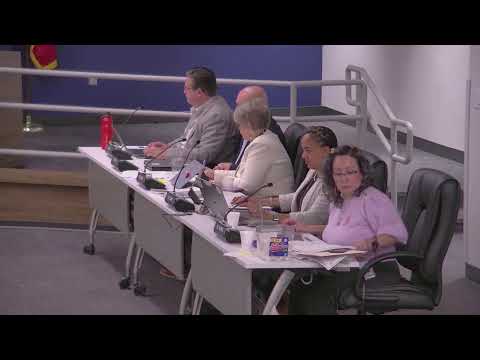
Schertz‑Cibolo‑Universal City ISD’s chief financial officer outlined the mechanics of the state special‑education funding model Oct. 17 and told trustees the district faces an estimated shortfall of roughly $10 million per year between state allocations and actual program costs.
The CFO explained how Texas funds special education through two main components: a mainstream allotment and weighted instructional arrangements that multiply the basic allotment by an arrangement‑specific weight and the student’s FTE/ADA time in that arrangement. Using sample student scenarios, staff demonstrated how FTE percentages are computed and showed that the district reports about 577 special‑education FTEs and roughly 1,071 mainstream ADA in the modeled year.
For fiscal 2023‑24 the state’s formulas allocated about $18.7 million for special‑education funding to the district. The CFO said district spending has historically exceeded allocations and estimated the gap — what the district effectively has to cover locally each year — is approaching $10 million. He described historical changes in state requirements (mandated spending percentages) and one‑time “band‑aid” additions to state funding that altered how mandates and allotments balance. The presentation noted state and federal supplements (IDEA‑B, SHARS) but emphasized that these do not close the spending gap.
Trustees asked for additional details and the CFO said final expenditure numbers were pending audit completion and the state’s PIMS allocation recalculation. District staff and trustees discussed using the board’s advocacy and legislative priorities to press for formula adjustments, and several trustees suggested tightening the language of proposed legislative asks to call for concrete changes rather than ambiguous recommendations.
No formal action was taken; staff said the issue will remain a legislative priority and that additional data and audit results will be provided to trustees.