Get Full Government Meeting Transcripts, Videos, & Alerts Forever!
Get email alerts on the Insurance Nonrenewals Climate topic
No spam. Unsubscribe anytime.
Senate Budget Committee releases nonrenewal data and hears witnesses on a widening climate-driven home insurance crisis
Summary
The Senate Budget Committee released county-level nonrenewal data showing rising homeowner policy nonrenewals concentrated in high climate-risk counties; witnesses—an academic, an independent agent and an industry analyst—debated whether climate change, inflation, litigation or state legal environments are the primary drivers.
The Senate Committee on the Budget on Tuesday released new county-level data showing rising homeowner policy nonrenewals and held its final hearing of the 118th Congress to examine how those trends intersect with climate-driven disaster risk, inflation and litigation.
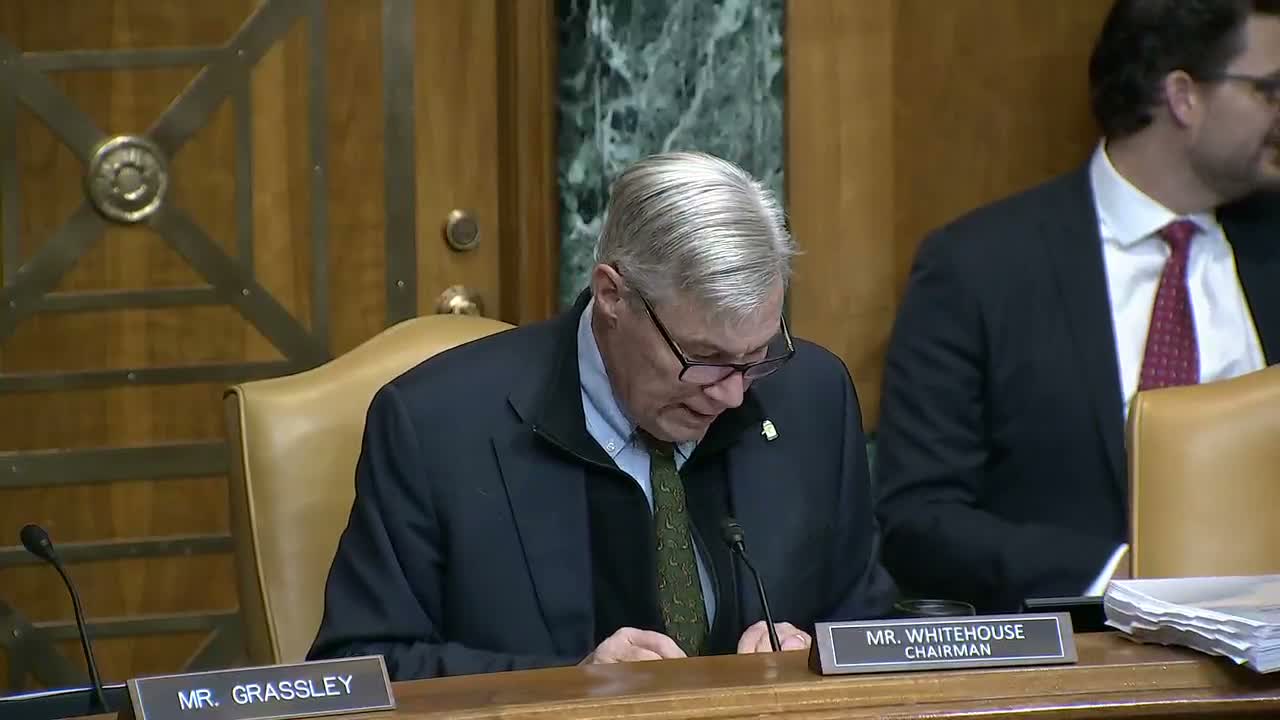
Chairman White house, who opened the hearing, said the committee’s report draws on data from nearly two dozen insurers representing roughly two-thirds of the homeowners market and warned that rising nonrenewals and premiums threaten mortgages, property values and community tax bases. “The answers are now and very, and it’s only getting worse,” the chairman said while placing an NAIC letter about potential data inconsistencies into the record and promising corrections if necessary.
Why it matters: Witnesses agreed that access and affordability have become serious problems in some markets but differed sharply on the principal causes. Ben Keys, a professor of real estate and finance at the Wharton School, said committee datasets—one covering about 47 million premium records (2014–2023) and a second nonrenewal dataset covering roughly 249 million policies (2018–2023)—show the average nonrenewal rate has almost doubled since 2020 and that 1.9 million policies were nonrenewed between 2018 and 2023. “These rates and their increases are highest in those areas with the greatest risk of climate related disasters,” Keys testified.
Ernie Shigalian, an independent insurance agent from Pawtucket, Rhode Island, described market conditions he sees in coastal communities: insurer exits, rapid growth of the residual risk pool and steep deductibles. He told the committee some Rhode Island coastal areas have seen a “562% increase in nonrenewals” and said the state’s residual market has grown by about 30% in two years. Shigalian said many consumers are pushed into surplus-lines policies or risk pools that charge 35% to 50% more than standard policies and often lack optional coverages.
Robert Hartwig, a risk-management professor at the University of South Carolina and a former industry economist, argued the industry remains fundamentally stable and that national insolvency rates have fallen over the past quarter-century. Hartwig pointed to other factors that push costs higher: population growth, litigation and inflation in rebuilding costs. He cited AM Best impairment-rate data and said that construction-material costs rose about 41% from January 2020 through June of the current year while homeowner premiums rose roughly 18% over the same period.
Where they agreed: Keys and Hartwig both said the highest-risk counties are experiencing the sharpest increases in nonrenewals and premiums and that insurers are making localized underwriting decisions rather than exiting entire states wholesale. Keys urged a coordinated federal effort to collect and share granular data on insurance costs, physical risks and mitigation options so communities and households can make better decisions.
Contentious exchanges: The hearing included heated moments. Senator Kennedy questioned Professor Keys about climate models and displayed social-media messages he attributed to Keys, which Keys denied writing. The committee also debated whether increased litigation and alleged fraud—particularly in Florida—explain state-level spikes in nonrenewals and why state reforms appear to be affecting market conditions.
Numbers and examples cited during the hearing: the committee’s nonrenewal dataset covers roughly 249 million policies (2018–2023); Keys said 1.9 million policies were nonrenewed between 2018 and 2023 and that 423,000 fewer nonrenewals would have occurred if 2020 rates had held; construction-material costs rose about 41% Jan 2020–June current year while homeowner premiums rose about 18%; Keys and witnesses singled out Florida and California as major contributors to the national nonrenewal increase; the National Flood Insurance Program-backed flood-policy count has fallen by about 16% since 2009, according to witnesses’ testimony.
What the committee asked for next: Chairman White house said written statements will be entered into the record, set a noon deadline the next day for senators’ questions for the record and asked witnesses to respond within seven days. He also noted the committee will follow up on NAIC’s letter about possible data issues.
The hearing did not include any formal votes or committee actions. The committee adjourned at the close of the session.