
Del City residents and others urge Oklahoma County commissioners to halt jail plan, cite AG opinion and conflicts of interest
Get AI-powered insights, summaries, and transcripts
Subscribe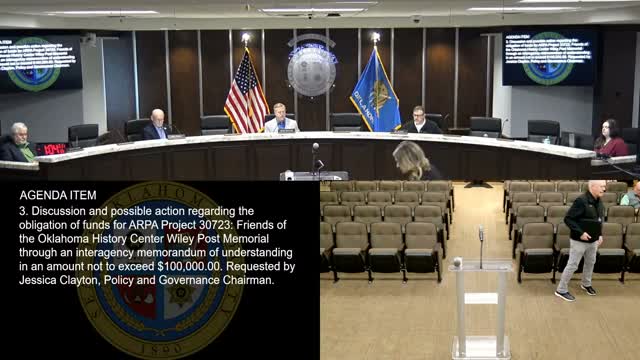
Summary
Residents and Del City officials urged Oklahoma County commissioners to pause a proposed jail project at 1901 East Grand, questioned an attorney general opinion about county authority, and alleged conflicts of interest tied to contractors and the jail trust.
Del City residents and local officials pressed Oklahoma County commissioners during public comment to halt plans for a proposed county jail and to reconsider a recent attorney general opinion they say limits municipal input.
Speakers at the meeting said the county’s decision to pursue a new jail and an accompanying mental-health facility at or near 1901 East Grand has not adequately accounted for local concerns and may involve conflicts of interest. The most repeated requests were for greater transparency about the legal basis for county authority, funding plans and the role of entities that have advised or profited from the project.
Several speakers cited the same AG opinion and raised similar legal and factual questions. Sean Cummings asked whether the attorney general’s letter effectively transfers operational control of the county jail to Sheriff Tommy Johnson and whether the county could face a violation if a mental-health facility opens before a jail is completed. Councilman Scott Tatum of Del City pointed to the AG’s statement — quoted in public comment — that "Oklahoma County is not a superior sovereign to Oklahoma City" and urged commissioners to weigh "legitimate local interests" under the court framework the opinion cited.
Residents described a pattern they said shows the process favored private interests and insiders. An extended commenter who was not named in the transcript accused county officials and advisory councils of manipulating the process and said consultants and private finance firms had profited; the speaker also named Morgan Stanley as one of the firms discussed during the procurement conversation.
Christopher Johnston urged that the jail trust be dissolved and that the sheriff assume control, saying, "Well, then the sheriff needs to assume complete control of the county jail," and pressing the commission to respond to an August 21 records request. Multiple speakers alleged that site selection and outreach were inadequate for Del City and neighboring communities and expressed concern about proximity to schools, day cares and special-needs residences. Gina Standridge said she had tracked the process since it began and described uncovered text messages she said showed site-selection tactics that disadvantaged certain neighborhoods.
Several speakers warned of fiscal uncertainty. Commenters cited a $260 million figure tied to voter authorization, and others argued the true cost could be substantially higher, pointing to estimates of $800 million to $1 billion raised in public remarks. Claudia Brown warned that the county had not explained how it would pay for the project and said residents should expect potential tax impacts.
Officials and staff present told speakers that items on the current agenda involved corrections to previously approved memoranda of understanding and did not request new ARPA funding. Commissioners responded to public comment with routine procedural items but did not, in the record provided, announce any change to the jail plan or funding approach.
The meeting closed public comment without a vote on the jail site; the commission subsequently approved corrected MOUs for items 3–5 and recessed to executive session to consider remaining matters.
What happens next: Commissioners voted later in the meeting to approve corrections to three previously authorized MOUs by voice vote and then recessed to executive session; the public record in the transcript does not show any final decision to stop or relocate the proposed jail.