
Madison County reviews draft leisure services master plan, staff flag $1M lighting upgrade and staffing needs
Get AI-powered insights, summaries, and transcripts
Subscribe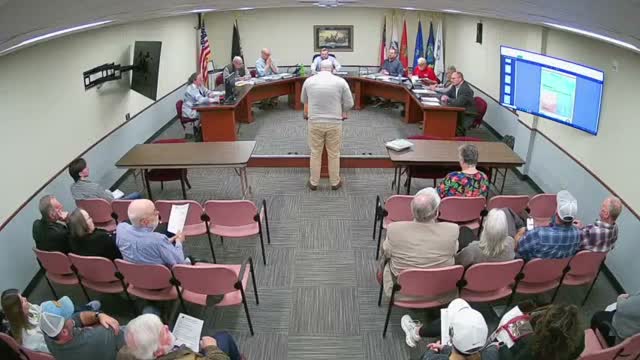
Summary
Consultants presented a draft 10-year Madison County leisure services master plan that prioritizes repairing existing parks, proposes a phased community recreation center, flags staffing shortages and operational system gaps, and includes a preliminary $1,000,000-plus LED lighting conversion estimate.
Ben Prew of SPG Planners presented a draft Madison County comprehensive plan for leisure services and told the Board the document is intended as a 10-year tool for county leaders, the recreation department and the senior center. He said the plan is online and that a summary in commissioners’ packets mirrors the full six-chapter report.
The plan draws on an advisory committee, public meetings and a resident survey of 391 respondents, Prew said. Its five community-driven focus areas are (1) improve existing facilities before expanding, (2) prioritize community centers and passive parks for future expansion, (3) create systems and processes for operations and maintenance, (4) address staffing shortages and (5) strengthen communications and branding.
SPG’s facility inventory and operational assessment reviewed county assets including San Xavier Park, Brewer-Phillips Sports Complex, Diamond Hill softball complex, Friars Landing, Memorial Park and Old Danielsville Gym. Prew said assessments identified service gaps compared with peer agencies and recommended both operational improvements (work-order systems, policies, staffing) and capital projects (ADA circulation, stormwater and erosion control at several parks).
On operations, staff and consultants said a work-order system exists in the county but needs configuration and training. As one staff member put it during Q&A, “there is a work-order system that is currently used ... it just needs to be added in and trained.” The plan recommends formalizing asset tracking, maintenance protocols and a data-driven approach to budgeting.
Capital priorities in Chapter 5 include parking reconfiguration and ADA circulation at San Xavier/Sammy Hagard, walking loops and playground investment at smaller neighborhood parks, kayak-launch and erosion controls at Briar’s Landing, and continued improvements at Diamond Hill. The plan also outlines potential sites and a phased approach for a community recreation center, stressing that large projects should be staged to align cost and implementation capacity.
A major cost item flagged during discussion was an LED lighting upgrade for the primary fields. Staff described a preliminary turnkey estimate of just over $1,000,000 to convert seven fields plus the football field to LED. Consultants said conversion could reduce utility spending roughly 40–50% and noted a 10‑year product assurance and warranty for materials and labor. The presentation pointed to potential lifecycle and relamping trade-offs that the board would need to evaluate for lease‑purchase or phased procurement.
Recreation staff also reviewed program issues: uniform and jersey contracts (three-year vendor agreement), out-of-county registration fees ($25), and a scholarship program available by application. Scheduling tensions with travel-tournament teams were raised repeatedly; staff noted the county currently leaves weekend field time open to outside users and has not pre-blocked Saturdays for rainouts or makeups, a practice some commissioners asked the department to reconsider.
Other operational suggestions in the plan include pursuing sponsorships (scoreboard advertising, event sponsors), evaluating concessions models (county-run, vendor, or mandatory parent sign-up with background checks), and creating a part-time nighttime supervisor position to cover evening facility oversight. Staff said the FY2025 budget includes funding for that part-time night supervisor to improve field supervision and responsiveness.
Why it matters: The plan presents a prioritized set of capital and operational steps aimed at closing service gaps, improving accessibility and making recreation services more sustainable. Many recommendations are feasible only with committed funding, clearer operational systems and additional staff or outside partnerships.
What’s next: The consultants asked for commissioner feedback and public comment before finalizing the report; staff highlighted the plan’s utility for grant applications and said the action plan and order-of-magnitude cost estimates should be used as a decision tool rather than final design budgets.