
Weber County adopts Nordic Village project-area plan after public objections on transparency and water
Get AI-powered insights, summaries, and transcripts
Subscribe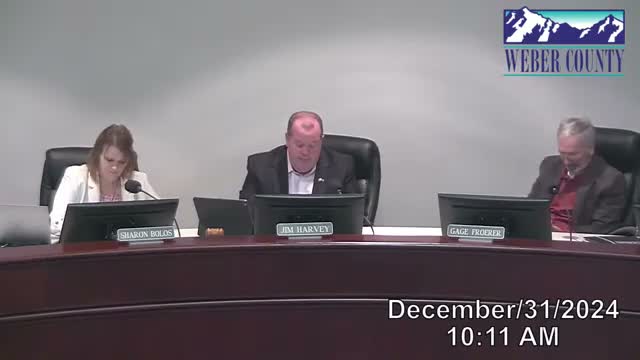
Summary
County commissioners approved Ordinance 2024-24 establishing the Nordic Village Community Reinvestment Area (CRA) despite multiple public speakers who said the plan and budget lack specificity, raised concerns about water availability and transfer of development rights, and asked for clearer public disclosures.
Weber County commissioners voted unanimously Dec. 31 to adopt Ordinance 2024-24, creating the Nordic Village Community Reinvestment Project Area and activating a 15-year project-area plan and budget that officials said is meant to model possible tax-increment financing.
The decision followed nearly an hour of public comments from residents of Ogden Valley who urged the commission to delay final approval until the county posts clearer, itemized project details. Jan Fulmer of Eden asked commissioners “not approving the final reading of the ordinance” and raised concerns that published reports showed higher unit counts than the development agreement, questioned whether water commitments exist for the proposed development and urged more transparency on how public funds would be used. “We need to bring something forward to the public to understand for the sake of transparency,” she said.
Other residents pressed finance and density questions. Beth Keswick asked whether resort sales tax proceeds would be contributed to the CRA for 15 years and why a maximum tax-increment payment of $18 million in the agreement differs from figures she read in the project budget. Peggy Doolingbaker and Felice Quigley said the plan and its rendering lacked essential details — building heights, legends and a clear site plan — and expressed alarm that some components appear aimed at short-term rentals rather than affordable housing.
County staff and the economic-development representative countered that the project-area plan and budget are statutory projections required by state law to model the finance mechanism and are separate from the development agreement, which controls actual land-use approvals. Lauren Thomas told the commission the most recent change to the ordinance corrected clerical errors in the plan and budget attachment; Stephanie Russell, the county’s economic development representative (participating online), reiterated that the plan is “a projection” and does not itself change zoning or building standards.
Sean Wilkinson, a county community-development official, and Assessor John Eulaberry answered technical questions: Wilkinson said Weber County does not approve water rights and relies on water providers and the State Division of Water Rights to verify supply; Eulaberry described Greenbelt (the state Farmland Assessment Act) and how rollback taxes work when agricultural land is removed from production. Wilkinson also explained that 565 residential units are the base density allowed by the development agreement and that additional counts in the project plan reflect aggregation of hotel and workforce-housing units and potential transfers of density allowable under the form-based zone and the development agreement.
After staff explanations and limited discussion, a commissioner moved to approve the ordinance’s final reading. The commission held a roll-call vote and the chair announced the motion carried unanimously.
What the vote did and did not do: the ordinance adopts the project-area plan and budget that activates the county’s statutory mechanism for tax-increment financing. Commissioners and staff repeatedly stated that the action is distinct from — and does not itself approve or modify — the development agreement, site plans, building heights or water-right allocations, all of which proceed through separate development-review processes.
Next steps: With the ordinance adopted, the community reinvestment area is established under the plan and budget on file. Questions raised in public comment — including the project budget arithmetic, where detailed infrastructure and improvement items will be posted, and the status of water approvals — remain outstanding in the record and, by county staff account, relate to the separate development agreement and water-provider processes rather than the ordinance vote.
Officials asked staff to respond to the specific public records and posting questions that were submitted during public comment; the meeting record shows commissioners said they had taken notes and would attempt to provide clarifying information to speakers who raised procedural and finance questions.