Commission approves Duke Energy's Bailey Mills solar project after added buffers, stormwater and decommissioning bond
Loading...
Summary
After a quasi-judicial hearing and technical review, the Jefferson County Commission approved Duke Energy Florida's Bailey Mills solar application with conditions including extensive buffers, stormwater controls, cultural-resource testing and an engineer-estimated decommissioning bond (approximately $8.5 million). Neighbors raised wildlife and enforcement concerns that Duke and staff addressed.
Duke Energy sought county approval for the Bailey Mills solar power plant, a proposed utility-scale project of roughly 400 acres built from a 960-acre ownership footprint; Duke told the board the plant would generate roughly 75 megawatts and that construction could begin in 2025 with completion in 2026 if approved.
County planning staff and outside consultants reviewed the application, focusing on land-use consistency, buffers, wetland setbacks, impervious-surface ratios, stormwater design, cultural-resource studies and a decommissioning plan. Staff concluded the revised application met the Jefferson County comprehensive plan and the county's solar-specific land-development code; planning staff noted the county's ordinance is among the state's most restrictive for solar. Duke responded to planning and public comments by removing planned fencing from wetland buffers, adding additional vegetative buffers and providing an engineer's estimate and financial security for decommissioning.
Duke's environmental and engineering team described a stormwater package sized for multiple critical storms, proposed vegetative buffers (including supplemental plantings where gaps existed), a phase-1 cultural assessment with more than 590 shovel tests and a decommissioning-bond estimate that staff said was just under $8.5 million. The application also committed to keeping inverters inside the fenced footprint and to locating noisier electrical equipment and the substation on the north side of West Capps Highway to reduce neighborhood impacts.
Neighbors asked about wildlife, migratory birds, the potential for 'lake-effect' impacts and buffer enforcement. Duke's environmental specialist said the company performed species surveys, will permit and relocate listed tortoise-like species if found (with Fish and Wildlife approval), and cited national studies that do not show mass mortality from modern PV installations. Staff noted the site avoids wetland fills and that state ERP permitting had been issued.
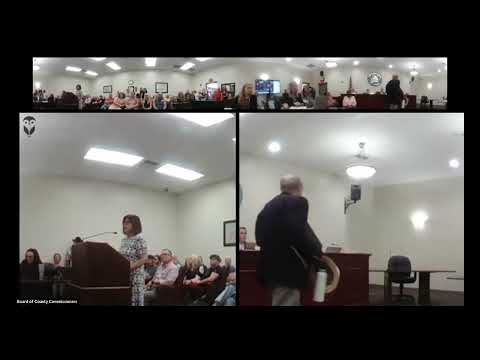
After hearing testimony and reviewing staff recommendations, the commission voted to approve the Bailey Mills solar major-development application with the conditions reflected in the staff report, including required buffers, the stormwater plan, cultural-resource compliance and regularly updated decommissioning security.