
Scranton fire department requests inspector reallocation, highlights prevention programs and levy-certification work
Get AI-powered insights, summaries, and transcripts
Subscribe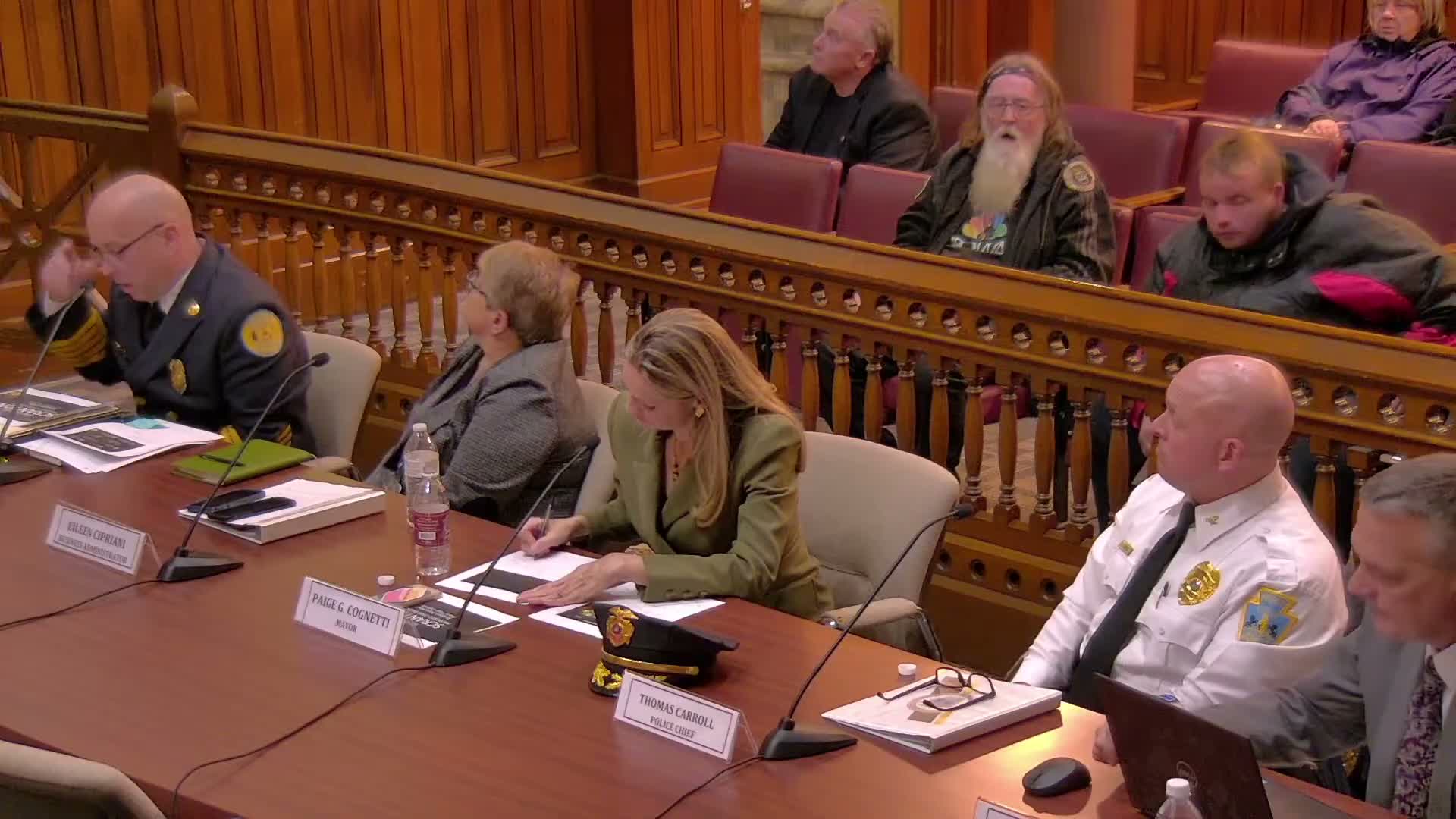
Summary
Fire leadership proposed shifting one firefighter into a fire-inspector role (no net personnel increase), described expanded prevention outreach and a smoke-detector blitz, and updated council on levee/SQRA work with the Army Corps and FEMA that could affect flood-insurance requirements.
Scranton's fire leadership asked the council to approve a reallocation that would convert one firefighter from the floor to a fire-inspector role; the chief said the change would not increase total headcount but would strengthen proactive prevention and life-safety inspections.
The chief detailed community-impact initiatives: about 1,275 community outreach hours, a smoke-detector program that installed 272 detectors this year, and a door-to-door effort to place detectors in homes. "Our goal... is to have a smoke detector in every house in the city of Scranton," the chief said, describing the initiative as a prevention priority that also reduces liability and workers' compensation exposure.
On flood mitigation and the levee-certification process, the fire and emergency-management team said their semi-qualitative risk assessment (SQRA) work with the U.S. Army Corps of Engineers and FEMA is ongoing; one of three levee systems appears likely to achieve certification, which could relieve property owners behind a certified barrier from mandatory NFIP (National Flood Insurance Program) requirements tied to federally backed mortgages pending federal approval.
The chief also reported technology and operations upgrades: station-alerting improvements that reduce dispatch-to-departure times, a mass-alerting capability using an IPAWS cog allowing municipal-level wireless emergency alerts, swift-water rescue certification with PEMA and the state fire commissioner, four new drones with thermal capability and updated training and mapping tools to improve incident response and damage assessment. The department said it placed orders for two new engines (cited in the presentation at about $1,072,000 per engine before equipment) and emphasized continued focus on inventory management and wellness programs.