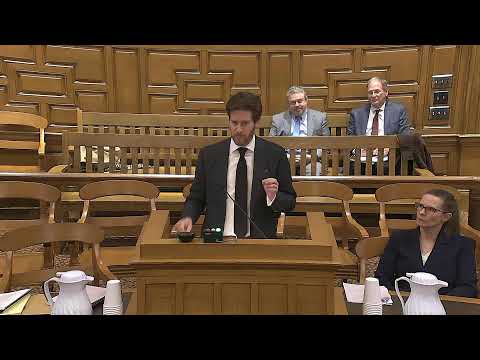
Appeals panel weighs whether substitute DNA expert testimony violated defendant’s confrontation rights
Loading...
Summary
Appellant argued that a testifying DNA expert who did not observe early lab steps relied improperly on a non‑testifying analyst’s work, violating the Sixth Amendment confrontation clause; the Commonwealth countered that eyewitness and other forensic evidence made any error harmless. The court took the case under advisement.
Chief Justice Amy Blake and the two‑justice panel heard argument in Commonwealth v. Frank Muara on whether admission of opinion testimony by a substitute DNA expert violated the defendant’s Sixth Amendment confrontation rights.
Appellant counsel Catherine Sullivan Leadridge told the court that the testifying scientist only “came in at step 3 of the DNA processing” and thus offered opinions based in part on the out‑of‑court work of a non‑testifying analyst, Emily DuPree. Leadridge argued that the substitute expert described herself as covering the first two steps for the vaginal swab and all four steps for a different swab, and that the testimonial hearsay from the analyst’s untested observations therefore infected an element of the offense (penetration) and could not be treated as harmless under the court’s Gordon precedent.
The panel probed the record to identify which steps each analyst performed and whether the substitute’s testimony could fairly be described as a technical review or as a substitute analyst opinion. Leadridge urged that, if the original analyst were available, the Commonwealth should call her or permit a retest; otherwise, she argued, admitting the substitute’s opinion deprived the defendant of the opportunity to meaningfully test the evidence by cross‑examination.
Rosella Nelkori, for the Commonwealth, agreed there was ambiguity in the testimony but argued that the overall evidence of guilt was “so strong and one‑sided” that alleged errors could not create a substantial risk of a miscarriage of justice. The Commonwealth pointed to eyewitness testimony, scene‑examination findings, and forensic identifications as corroborating proof that would survive exclusion of any improperly admitted opinion.
The justices questioned whether Gordon controls in a multiple‑analyst setting, whether removal of the challenged testimony would alter the verdict, and what remedy (retest, calling the original analyst, or reversal) would be appropriate if there was a confrontation violation. After extended questioning the court stated the matter was under advisement.
The panel did not announce a decision from the bench.