
Central Asian leaders adopt joint statement, back Kyrgyzstan for UN Security Council seat
Get AI-powered insights, summaries, and transcripts
Subscribe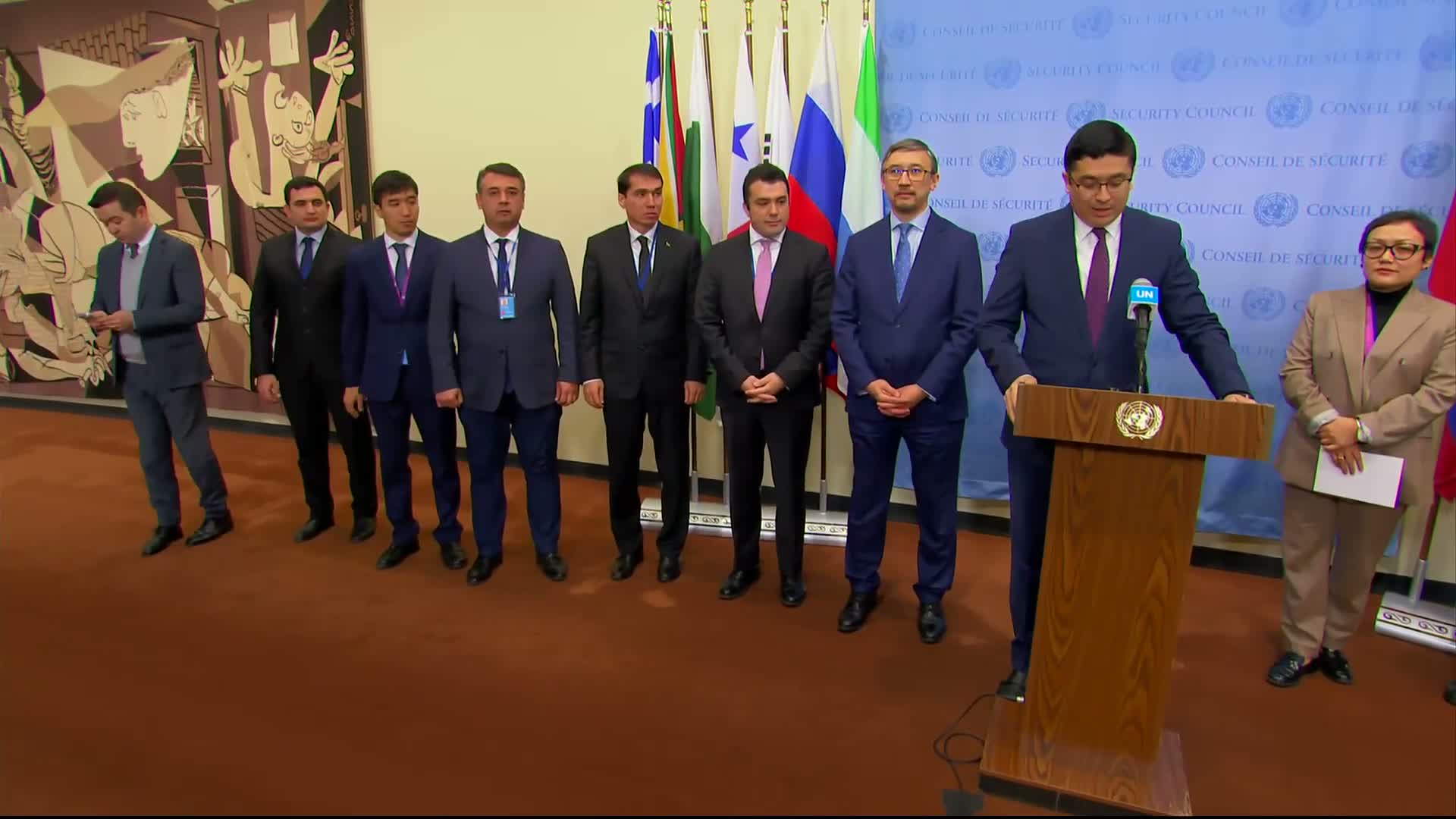
Summary
At a Tashkent summit on Nov. 16, Central Asian heads of state adopted a joint statement and several documents, including an address to U.N. member states endorsing Kyrgyzstans candidacy for a non-permanent seat on the U.N. Security Council for 20272028.
Ambassador Lutbuk opened a news briefing on the seventh consultative meeting of Central Asian heads of state in Tashkent on Nov. 16 and said the session concluded with adoption of a joint statement and a package of documents intended to strengthen regional cooperation.
The most consequential item announced was an address to United Nations member states urging support for the Kyrgyz Republics candidacy for a non-permanent seat on the U.N. Security Council for the 20272028 term. Ambassador Lutbuk described the endorsement as reflecting "the unanimous support of Central Asian countries" for Kyrgyzstans bid; Aida, speaking for the Kyrgyz delegation, said, "If elected, Kyrgyzstan will serve as a responsible and principled member of [the] Security Council." These statements were delivered as part of a formal set of documents the meeting approved.
The briefing also highlighted a March 2025 treaty signed in Khujand among Kyrgyzstan, Tajikistan and Uzbekistan on the junction point of their state borders. Ambassador Lutbuk called the accord a "historic breakthrough," saying that territorial issues have been "finally settled," and that border crossing points have opened. He said the summit produced new arrangements for water and energy cooperation and restored transport links intended to facilitate trade and investment.
Officials framed the package of documents as a practical roadmap for security and development. The leaders adopted a concept for regional security and stability to guide responses to operational challenges and a catalog of security risks and preventive measures covering 20262028, with an explicit focus on transnational crime, extremism, cyber threats and environmental risks.
The meeting further adopted a decision on the "full participation" of the Republic of Azerbaijan as a consultative participant in the consultative meetings of Central Asian heads of state. Ambassador Lutbuk said that step is intended to "build a strong bridge between Central Asia and the South Caucasus" and to expand trade, economic and cultural cooperation.
The briefing included no roll-call votes or tallies; Ambassador Lutbuk described the outcomes as adopted by the participants. The statements and documents announced at the Tashkent meeting are now positioned as submissions and policy frameworks: the address supporting Kyrgyzstans U.N. candidacy is to be delivered to U.N. member states, while the security concept and risk catalog set out cooperative priorities for 20262028.
Aida, who spoke after Ambassador Lutbuk, thanked Uzbekistan for its chairmanship and reiterated Kyrgyzstans pledge to contribute to international peace and stability if elected to the Security Council. The briefing closed with Ambassador Lutbuk offering final thanks to attendees.
Next steps identified in the briefing: the address endorsing Kyrgyzstan is being circulated to U.N. member states; the regional security concept and risk catalog are presented as frameworks for cooperative implementation through 2028. The briefing did not specify implementation timelines, funding sources, or any vote tallies for the adopted documents.