
Senators debate extending lawful use of U.S. driver licenses from 30 to 90 days; bill advanced with lingering concerns
Get AI-powered insights, summaries, and transcripts
Subscribe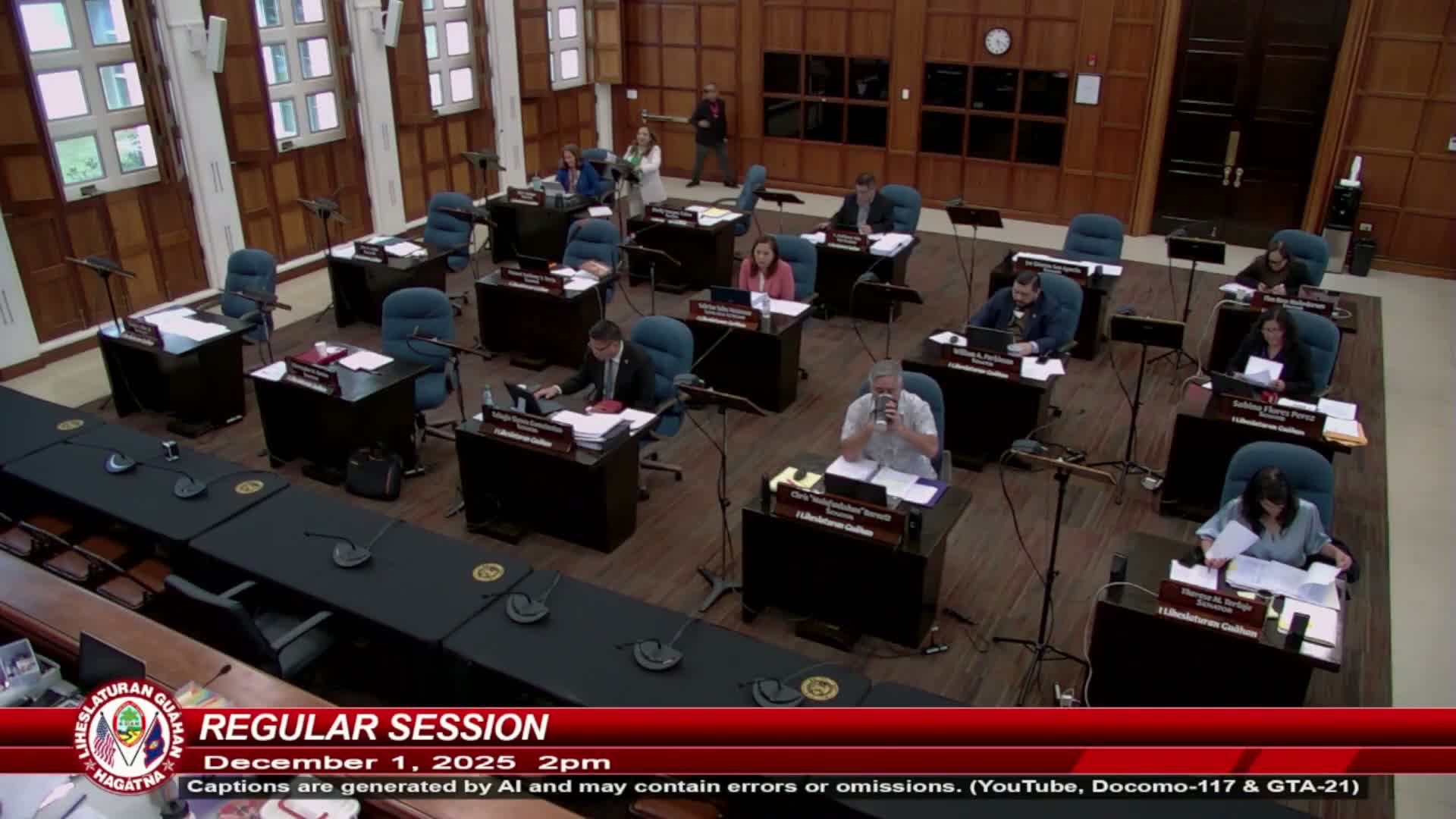
Summary
Bill 165‑38 would extend the time a person with a valid U.S. driver's license may lawfully operate a vehicle in Guam from 30 to 90 days. Proponents say it reflects operational delays at the Department of Revenue and Taxation; opponents worry it may impede record‑keeping and not reduce DMV line congestion.
The Legislature debated Bill 165‑38, which would extend the period during which holders of valid U.S. driver licenses may operate motor vehicles in Guam from 30 days to 90 days. The sponsor said the change would align statutory deadlines with agency capacity and modern migration and military deployment realities.
Supporters: proponents — including the bill's author and multiple senators — argued the extension would help service members, federal contractors, temporary workers and students who often cannot secure DRT appointments within 30 days. They said the law should reflect practical implementation realities and cited other U.S. jurisdictions that use longer limits.
Concerns: several senators questioned whether the measure would actually reduce lines at DRT or simply shift the timing of workload. Lawmakers worried about relying on an "honor system" for newcomers to register or notify DRT of arrival, which could hinder tracking of residents and complicate public safety recordkeeping. One senator proposed a companion amendment requiring a simple electronic or in‑person notification of arrival to give DRT better tracking capability; that amendment was submitted for consideration.
Agency input: DRT participated in committee and the committee report added clarifying language requiring DRT to publish information and a process for the transfer; DRT reportedly signaled no objection to the bill during committee hearings.
Outcome: floor debate remained active and the bill was placed on the third‑reading file after committee and floor discussion; senators said they expect additional technical amendments to reconcile operational concerns before final passage.