Lenoir City considers sales-tax referendum to fund Habitat repairs, parks expansion
Loading...
Summary
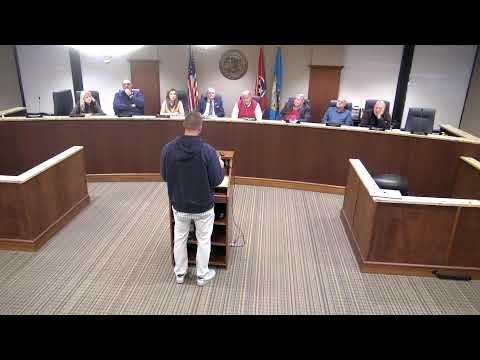
Lenoir City council held a workshop on a proposed sales-tax referendum that would dedicate roughly $1 million a year to Habitat for Humanity for critical repairs and preserve funds for parks and recreation; council scheduled public hearings for Dec. 8 and Dec. 29 but took no vote.
Lenoir City council at a workshop on Thursday reviewed a proposal to place an additional 0.75 percentage-point sales-tax measure on the ballot that would dedicate revenue to affordable housing repairs through Habitat for Humanity and to local parks and recreation needs.
Mayor (name not specified) said the proposed increase—"75¢ on $100 of groceries"—could generate about $4 million a year, and the plan under discussion would allocate $1 million annually to Habitat for Humanity for critical repairs, home preservation and some new construction. The council did not vote; it scheduled a first reading and public hearing for Dec. 8 at 5:30 p.m., with a potential follow-up hearing and council consideration on Dec. 29.
Tony Davis, executive director of Southern County Habitat, told council the affiliate has worked locally for more than 30 years, building roughly 130 homes and completing about 170 critical-repair projects. "One million dollars a year would be a game changer," Davis said, arguing that an unrestricted local funding source would allow the affiliate to address larger repairs that typical grants, which often cap at about $15,000 per address, cannot cover.
Rachel Rendon, the development director who presented demographic and housing data, said about half of the city's housing stock was built more than 50 years ago (data through 2020), seniors account for roughly a quarter of the population and about 20% of residents live below the poverty rate. Rendon said the average price for a new home in Lenoir City is just under $530,000, a level she said many local households cannot afford.
Habitat staff showed a video and a local family's story to illustrate how small exterior repairs, ramps and HVAC or electrical upgrades can prevent safety hazards, reduce hospital visits and preserve homes. Staff described program protections used to preserve public investment, including a five-year forgivable restrictive covenant on assisted properties that requires repayment if a household sells early so funds can be recycled into the program.
Councilors and staff also discussed outreach to veterans—staff estimate veterans make up about 10% of the population served but can be difficult to reach because many do not seek assistance—and agreed that local, unrestricted funds could be layered with federal and other grant programs to extend impact. Tony Davis said Habitat would hold funds in a separate account, provide annual reports on spending and not commingle the money with other activities.
Parks and recreation staff outlined facility and program pressures across about 75 acres of parks, including heavily used sports fields, a community pool and a downtown memorial building dating from 1951. Staff reported growth in youth programming and said a recent survey showed about 68–70% of respondents preferred a sales-tax increase to pay for park improvements such as additional courts and walking-trail extensions.
Mayor and staff cautioned that if a similar countywide measure were later adopted by the county, the city’s local allocation could be reduced; the mayor described a scenario in which a city allocation could fall from $1 million to $500,000 if the county chose to adopt or change the distribution. Staff emphasized the council would only be authorizing placement of the question on the ballot; the final decision would rest with city voters.
The council did not take a formal vote at the workshop. The first reading and public hearing on the measure are set for Dec. 8 at 5:30 p.m.; the agenda may include a follow-up public hearing and council consideration on Dec. 29.