Get Full Government Meeting Transcripts, Videos, & Alerts Forever!
Get email alerts on the Transfer Development Rights topic
No spam. Unsubscribe anytime.
Board approves conservation TDR ordinance after divided debate; opponents cite valuation and receiving‑site concerns
Summary
By a 4–3 vote, the Planning & Zoning Board recommended a conservation transfer‑of‑development‑rights program to incentivize permanent protection of ecologically valuable parcels (mature canopy, mangroves, etc.) in exchange for TDRs; dissenters warned the proposal is vague on valuation, receiving sites and potential dilution of historic‑building TDRs.
The Planning & Zoning Board recommended, by a 4–3 vote, an ordinance to establish a conservation transfer‑of‑development‑rights (TDR) program in Coral Gables that would let property owners permanently protect ecologically valuable land and receive transferable development rights calculated by USPAP‑compliant appraisals.
Staff described the program as voluntary: owners who grant a perpetual conservation easement (a “GOSEA” in the draft) could receive TDRs based on two independent MAI‑level appraisals and comparable city transactions. Eligible sending sites would be evaluated for habitat quality, canopy coverage and conservation value; exceptional sites could receive ecological bonuses and application review would include the landscape beautification advisory board and City Commission.
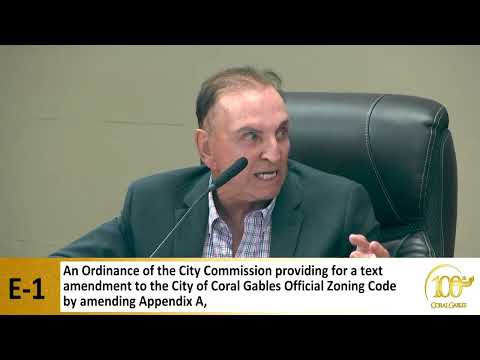
Several board members raised a long list of reservations. Felix Pardo said the historic‑building TDR system was designed for built assets and called the conservation TDR concept “impossible” to value without a citywide assessment of eligible sending parcels and receiving capacity. Gonzalo Sanabria called the language “obtuse” and worried about the economic burden on property owners (two MAI appraisals and maintenance agreements). Members asked staff for a clearer conversion method, limits on receiving rights, and an estimate of how many parcels would qualify.
A motion to defer the item for additional edits failed; a subsequent motion to approve staff’s recommendation passed 4–3. The approving majority described the program as voluntary and narrowly tailored; dissenting members asked staff to bring back assessment data and tighter receiving‑site clarity when the item proceeds to the City Commission.