
Salinas planning commission hears PlaceWorks roadmap for Phase 1 zoning amendments tied to housing element
Get AI-powered insights, summaries, and transcripts
Subscribe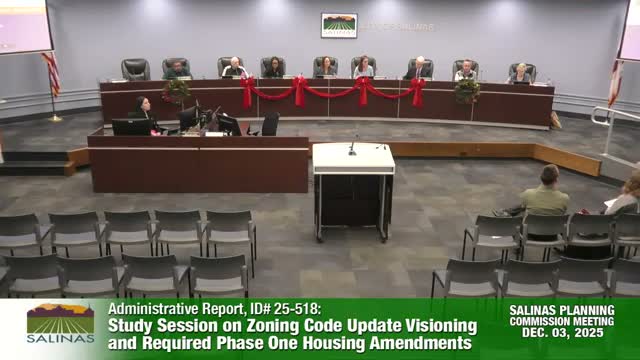
Summary
PlaceWorks presented a Phase 1 zoning code update focused on state‑required housing‑element changes — including ADU updates, objective design standards, parking reductions near transit, emergency shelter rules and employee housing allowances — and commissioners pressed for clearer outreach, organization and staffing implications.
PlaceWorks presented the Planning Commission with a three‑phase plan to update Salinas’s zoning code, saying Phase 1 will prioritize changes required by the city’s recently adopted housing element and state law. "As John said, my name is Amy Sintzheimer. I work with Place Works," the consultant said as she outlined the project scope and schedule.
The consultant said Phase 1 focuses on implementing housing‑element requirements that the state is actively enforcing and that Phase 2 will align zoning with the new general plan. She said the update aims to reduce subjectivity in land‑use findings and incorporate objective design standards to speed review: "The state is calling for a lot more, easy to decide regulations and standards where you're not having to make a decision about what it means."
Key Phase 1 proposals described to the commission include updating accessory dwelling unit (ADU) regulations to match frequent state changes; revising parking rules to reduce minimums near transit corridors; clarifying conditional use permit findings so they are objective; allowing certain employee‑housing configurations in residential zones (with small projects treated differently than larger, discretionary projects); and making emergency shelter, low‑barrier navigation centers and supportive housing allowable in more zones subject to objective standards.
Commissioners and staff focused on practical implementation questions. Lisa Brinton, the community development director, said improving organization and removing subjective language is a priority: "I think one is removing subjectivity, giving clear parameters and guidelines for decision making." Commissioners pressed for more proactive community engagement, pre‑meeting materials and a sustained sequence of study sessions so commissioners can review material before deliberations. Several members asked the consultant to convene focused interviews with architects, builders and other frequent code users as part of outreach.
Staff warned of the limits of local discretion under state law and the risks of noncompliance. The consultant advised the city will need bridge documents and careful drafting to avoid unintended consequences when state rules replace local requirements. Staff also noted potential budget and staffing implications if more applications become administrative and require faster turnaround.
PlaceWorks gave a preliminary schedule that includes intensified public outreach early next year and an expected overall project completion in late 2027. The commission did not take formal action on any zoning text during the session; PlaceWorks said draft Phase 1 amendments will be returned for review and public hearings when available.