Get Full Government Meeting Transcripts, Videos, & Alerts Forever!
Get email alerts on the Budget Adoption topic
No spam. Unsubscribe anytime.
Montgomery Legislature adopts 2026 operating budget after three amendments; farmland‑protection funding deferred
Summary
After correcting numeric errors and removing select staffing lines, the Montgomery County Legislature adopted the 2026 operating budget as amended. Members also discussed a $250,000 farmland protection proposal that is not currently funded and agreed to revisit funding in January.
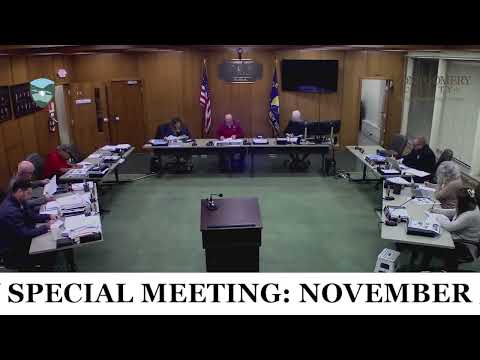
The Montgomery County Legislature adopted the 2026 operating budget as amended at a special meeting held immediately after a public hearing.
The body passed three separate amendments before final adoption: (1) technical numeric corrections to line items and the fiscal‑impact statement identified by finance staff, (2) an amendment that removed three staff line items (including a director‑level line discussed at the public hearing), and (3) a final amendment updating total appropriations and the tax levy figures. Members and finance staff described corrected totals and their effect on the tax levy percentage during the meeting.
Clerk/finance staff walked through the corrections that had been proposed and accepted: corrected amounts for a labor relations assistant line, an office‑supplies line, moving the lead‑poisoning prevention grant figure from expense to revenue, correcting a senior‑caseworker parenthetic amount to 1081, and reducing court‑related expenses by $15,000. After the amendments the assembly discussed revised total appropriations and tax‑levy figures (members described levy percentage changes in floor discussion ranging roughly from about 2.21% to 2.27% depending on the amendment set).
Separately, legislators questioned whether funding for a newly approved farmland‑protection resolution was included in the 2026 budget. Staff and members confirmed the farmland protection program was not in the enacted budget and described the program’s original financing concept — relying on increased assessed value when farmland converts out of agricultural use (so‑called rollbacks) — and the difficulties of guaranteeing a $250,000 annual funding stream from that mechanism. Members discussed alternatives (sales tax adjustments, using fund balance, or phasing the program) and agreed to revisit a formal funding resolution in January so the item would not require an intra‑cycle budget amendment this year.
The chair called the final voice/poll vote and declared the resolution adopting the 2026 operating budget as amended passed. No further business was raised and the meeting adjourned.