
Sedgwick County review finds mid‑cycle population shifts small; commissioners debate redistricting process
Get AI-powered insights, summaries, and transcripts
Subscribe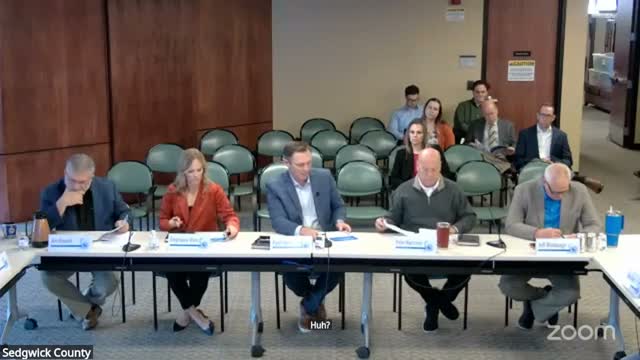
Summary
County legal and GIS staff reported mid‑census population estimates that keep district deviations well within legal tolerances, while at least one commissioner criticized the 2021 process and urged a fuller, more transparent review before the next redistricting cycle.
Sedgwick County legal and GIS staff told commissioners on Dec. 2 that mid‑cycle population estimates do not require immediate redistricting, but the meeting rekindled long‑running complaints about how the county drew district lines in 2021.
Assistant County Counselor Adrienne Clark opened the presentation by citing the statutory duty that prompts the review: "such district shall be subject to alteration at least once every 3 years," and she noted the constitutional standard the office uses in practice — districts may show up to a roughly 10% spread between the largest and smallest districts, which she described as about ±5% from the ideal district population.
Jack Joseph, a GIS analyst, reviewed the data and methodology the county used to estimate current populations. Joseph said the county started with the 2020 census baseline (about 523,000 residents) and added estimated growth derived from local appraiser records and address‑point data. He described the approach: classify new address points as rental or owner occupied by comparing physical and mailing addresses, apply vacancy rates (renter ~1%, owner ~7%) and an average household size of 2.54, then add those estimated residents to the 2021 adopted plan. Using that method, Joseph said the estimated county population is roughly 544,000 and the target per district is about 108,000–109,000; the largest district deviation from that target is about 1.84%, which he said is well within the county's ±5% tolerance.
The presentation prompted questions about growth trends and forecasting limits. Commissioners asked whether recent new‑address counts (roughly 8,786 new residential addresses in the recent multi‑year span) represent real growth or internal displacement. Joseph cautioned that forecasting is difficult and emphasized the county relied on "hard" data from the Census Bureau, the American Community Survey and local address and appraisal records rather than speculative projections.
A commissioner who spoke at length said the 2021 process was flawed, argued the current map produces large geographic and socioeconomic disparities across districts and alleged the map traces to a gerrymandered configuration dating to 1986. That commissioner urged a more inclusive process and suggested the commission consider changing the number of districts in the future. County attorneys and staff responded that they were not aware of successful lawsuits alleging gerrymandering against the county in recent decades and recommended caution about making wholesale changes before 2030 census data are available.
For now, commissioners were presented with staff's estimate that district populations remain within acceptable legal deviation ranges. Staff recommended monitoring and returning to the matter under the three‑year review timeline or once 2030 census data become available.