Get Full Government Meeting Transcripts, Videos, & Alerts Forever!
Get email alerts on the Homelessness topic
No spam. Unsubscribe anytime.
Nonprofit urges Montgomery County to fund transitional housing after documenting more than 100 residents without stable housing
Summary
Judith Chappell of Hope for the Homeless Montgomery told commissioners the group has documented 103 county residents in urgent housing need and asked the board to add the nonprofit to the county's 2026 line‑item budget to support a 90‑day transitional supportive service with case management.
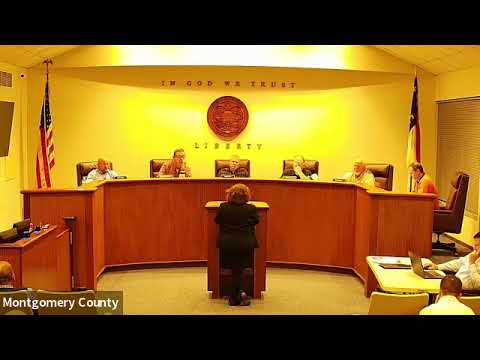
Judith Chappell, speaking on behalf of Hope for the Homeless Montgomery, told the Montgomery County Board of Commissioners on Nov. 18 that the group has documented 103 Montgomery County residents facing housing insecurity as of July and said the broader need may exceed 800 residents.
Chappell described a range of vulnerabilities among those she has worked with, including severe physical illness, mental-health conditions and substance-use challenges. She said the documented group included 66 adults and 37 minors, multiple families (one household of nine people living in a car) and individuals living in vehicles or in structures not designed for habitation. "We refer to them as our neighbors, not homeless, but our neighbors who happen to be homeless," she said.
Chappell proposed a transitional supportive-service model: time-limited stays (about 90 days), high-quality clinical case management, gender-appropriate housing arrangements and participant obligations that include contributing a portion of income and meeting weekly work and recovery goals. She said the program would be abstinence-based and would include explicit cause for dismissal for substance use or aggressive behavior.
Her organization, Chappell said, has helped secure housing for 20 individuals so far and uses established programs where available, including rapid rehousing and Section 8. She listed local partnerships and board members, saying Hope for the Homeless participates in the North Carolina Coalition to End Homelessness coordinated entry and in HUD’s point‑in‑time count.
During follow-up questions, Chappell said the nonprofit recently completed its incorporation and had submitted a 501(c)(3) application; she offered to provide the group's budget documents to commissioners. County staff suggested opioid settlement funds already leveraged for peer support and Narcan inventory could be a potential funding source if the program includes treatment and recovery components.
Chappell also reported interest in a potential facility — the former Masonic Lodge on El Dorado Street — and said the group is obtaining zoning information; she asked the board to add Hope for the Homeless Montgomery to the county's 2026 budget line items to support operations and case management. The group distributed brochures and a contact number for volunteers and referrals.
Sheriff Pete Hearn, who spoke later in the meeting, said the nonprofit has been a practical asset to the sheriff’s office for finding and assisting people in need, and he praised the group's responsiveness. Commissioners asked staff to explore possible funding channels and expressed general support for collaboration.
Next steps: Chappell said she will provide budget paperwork and remain available to follow up with county staff about zoning, partnerships and funding options.