
Connecticut Board of Pardons and Paroles grants pardons to dozens of applicants in Dec. 3 Zoom docket
Get AI-powered insights, summaries, and transcripts
Subscribe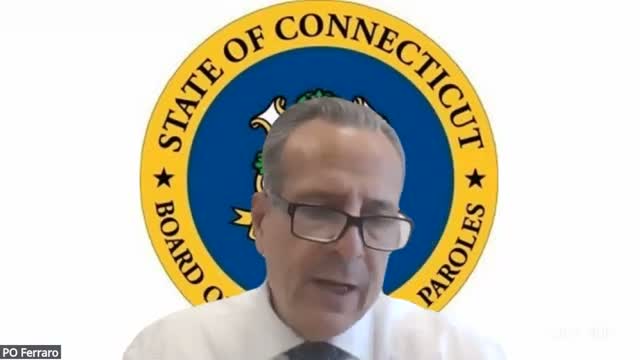
Summary
The Connecticut Board of Pardons and Paroles heard a full absolute-pardon docket on Dec. 3, 2025, granting pardons to the majority of applicants after testimony about rehabilitation, treatment and community work; one case was continued and all grants remain tentative pending record checks.
The Connecticut Board of Pardons and Paroles held an absolute-pardon hearing by Zoom on Dec. 3, 2025, and voted to grant pardons to most applicants who appeared, while continuing one matter for lack of appearance.
Chair Jennifer Medina Zaccagnini opened the session and outlined the board’s authority and process, telling applicants, “The people of the state of Connecticut have vested the Board of Pardons and Paroles with extraordinary power to grant pardons for convictions in the state.” She reiterated that any pardon granted at today’s hearing is tentative until all record checks are completed by the Connecticut State Police Bureau of Identification.
Why it matters: Pardons can remove legal barriers to employment, housing and professional licensing; board members repeatedly cited applicants’ long periods without new arrests, participation in treatment programs, community service or family-care responsibilities when explaining votes.
What happened: The board heard dozens of individual cases. Attorneys and applicants described rehabilitation efforts ranging from long-term sobriety and therapy to sustained volunteer work and mentoring. Examples that drew comment included a veteran who described VA-linked treatment and volunteer aims; a former incarcerated man who has spent a decade mentoring young people after recovery; and a clemency recipient who seeks a full pardon to move beyond a childhood conviction.
Several board members pressed applicants on specifics — for example, a panel member expressed doubts about one applicant’s claims that he no longer drove without a license and had stopped drinking, while other members cited on-file program completion and clean community records in voting to grant. Attorney Alex Taubes, arguing for Kyron Tucker, summarized his client’s record by saying, “10 years without an arrest, 10 years without a charge, 10 years without a conviction. That’s not luck or chance. That’s a changed life.” Applicant Taylor Goodwin, who previously received clemency, told the board, “A pardon…will grant me the opportunity to live apart from punishment for the first time in my life.”
Votes at a glance: The board moved and voted on individual pardons throughout the hearing. In nearly every case the board voted to grant an absolute pardon; recorded roll-call votes show the chair (Jennifer Medina Zaccagnini), Robert Cizauskas and Rufaro Berry as the voting members present. Notable items:
- Jose Galicia Vega — granted (Berry recorded a dissenting vote; chair and other member voted yes) - Yara Vergara — granted - Kyron (Byron) Tucker — granted - Benjamin Smith — granted - Guy Salvati Jr. — granted - Frank Fiscino — granted - Nicholas Henry — granted - Antonio Pitt — granted - Steven Page — granted - James/Michael Pontes — granted - Juan Vega — granted - Donald Doward — granted - Norman Edwards Jr. — continued (one-time continuance; matter continued to next month; failure to appear at next hearing may result in denial) - Taylor Goodwin — granted - Willie Kinder — granted - Jose Morales III — granted - Larry Oxendine — granted - Natasha Pope — granted - Antonio Prisco — granted - Catherine Richardson — granted - Jeffrey Rock — granted - Romel Saona — granted - Ervin (Irvin) Velasquez — granted - Carrie Alice Vingo — granted - Lawrence Welch Jr. — granted - Tyquan (Taekwon) Welfare — granted
(Each grant was described in the record as an “absolute pardon” and recorded as granted by the voting panel; the one continuance for Norman Edwards Jr. was moved and approved.)
Procedure and next steps: Board staff reminded applicants that grants announced at the hearing are tentative; finalization requires successful completion of record checks by the Connecticut State Police Bureau of Identification and other clearing steps. The chair and staff said pardons could take up to about 10 weeks for the official erasure process to be completed and that results would be emailed within about a week and posted to the board’s website—generally within 48 hours.
The hearing concluded after the final cases were heard and votes recorded. The board recessed briefly mid-docket for technical assistance and then resumed the livestreamed session to complete the docket. Certificates of pardon will be mailed once records are cleared.
The Board of Pardons and Paroles is responsible for reviewing pardon applications from the people of Connecticut and applies criteria that include the seriousness of the offense, victim impact, time elapsed since the offense and evidence of rehabilitation. The board’s decisions at this session will be listed on the board’s website and remain subject to final record verification.