Get Full Government Meeting Transcripts, Videos, & Alerts Forever!
Get email alerts on the Student Safety topic
No spam. Unsubscribe anytime.
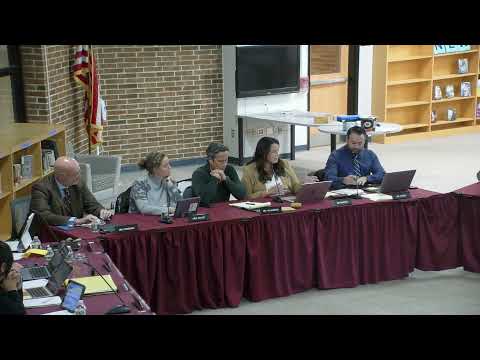
Moorestown board reviews midyear SSDS report and district anti-bullying programs
Summary
Supervisor of counseling Lauren Schmidt presented the Jan–June Student Safety Data System (SSDS) report showing how alleged and confirmed HIBs are recorded and reviewed; the district emphasized SEL programming and use of a new MyK12 tracking tool to improve accuracy and interventions.
Lauren Schmidt, the district’s supervisor of counseling and assessment, told the Moorestown Township Board of Education on Nov. 18 that the Student Safety Data System (SSDS) report for Jan.–June 2025 is intended to capture both technical incident counts and the district’s efforts to prevent and address harassment, intimidation and bullying (HIB).
"We do the Student Safety Data System twice a year," Schmidt said, explaining the report period and the two components the state ties together: incident reporting (HIB alleged/confirmed, violence, vandalism, substance incidents) and the district’s SEL programming that supports prevention.
Schmidt walked the board through apparent discrepancies on the district slides, noting that the "incident total" column excludes "incidents leading to removal," while a separate column records those events. She cited the Upper Elementary School (UES) as an example: "At UES, you're gonna see 6 HIBs were alleged, 2 were confirmed," and explained that multiple offenders or differences in coding can make confirmed counts appear higher than alleged counts.
The presentation listed programs across grade bands — Inclusive School Weeks, Red Ribbon Week, "mix-it-up" lunches, character education, therapy dogs, and the Nurture Heart approach — and emphasized training for anti-bullying specialists and administrators. Schmidt highlighted a new district workflow using the MyK12 system to guide counselors through investigations and to improve accuracy.
"It's a really step-through process... so we're really being a lot more accurate, proactive with bullying," she said.
Board members asked how the SSDS reporting cadence and state intent differ from broader SEL measures; Schmidt and Superintendent Dr. McNeely said the SSDS provides required incident data while the state’s report-card grading (and related SEL documentation) demonstrates what the district is doing to prevent incidents. "The SSDS is just one component of it. And then HIB grades is the other component," Schmidt said. Dr. McNeely added that the district will use repeated comparisons across months to identify trends and evaluate whether specific programs are working.
The board moved to accept the SSDS submission as part of the superintendent’s recommendations (motion recorded on the agenda). The transcript did not include a fully explicit vote tally for that particular motion in the public record excerpt.
What it means: The report frames Moorestown's approach as twofold — document required incident counts to the state and show the preventive work the district is carrying out. The district highlighted both ongoing training for staff and expanding tools to improve reporting accuracy; administrators said they will continue to compare month-to-month data to identify where programs are effective or need adjustment.
Next steps: The SSDS report is submitted twice yearly; the district expects to present the second-half numbers and the district grade in May 2026 when the state’s report-card components are finalized.