
Wells selectmen appoint subcommittee to draft lodging fee calculations after legal briefing
Get AI-powered insights, summaries, and transcripts
Subscribe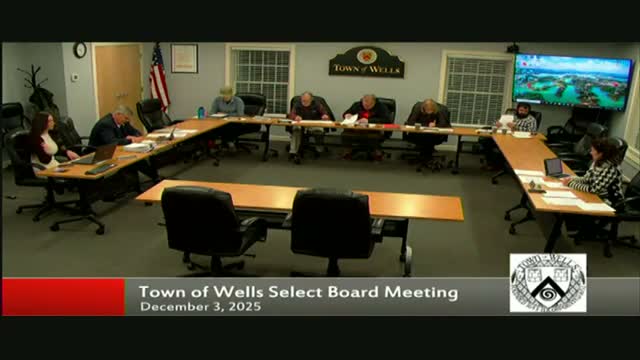
Summary
Selectmen appointed two members to draft initial lodging fee calculations and sought staff data tied to the 2020 Eno v. Town of Bar Harbor decision; debate focused on whether to pick a fee now or produce a data-backed number for phased implementation.
Selectmen on Dec. 3 opened a workshop to define the mission of the town's Lodging Advisory Committee and to map next steps for setting lodging-license fees, appointing a two-member subcommittee to prepare initial calculations.
Leah, the staff attorney, briefed the board on Eno v. Town of Bar Harbor (2020), explaining that "any fee established by a municipality for any license or permit must reasonably reflect the municipality's costs associated with that license or permit procedure and enforcement," and that courts consider both direct and indirect costs as well as certain intangible items when reviewing fee reasonableness.
Board members debated process and timing. One selectman argued against indefinite delay, saying businesses "have already set their rates" and that the town should not keep pushing a decision. Others urged staff-led data work and careful math, noting the Bar Harbor case was persuasive because the town there "did a very excellent job at crunching the numbers." A lodging-industry representative offered the advisory committee's help to "let us do the math" and come back with a defensible recommendation.
To move the work forward, the chair appointed Selectmen Kathy and Jim as a subcommittee to "figure out the number and present it"; staff committed to generate cost inputs (wages, vehicle costs, inspection time, enforcement contacts and equipment) and to tie that analysis to the Eno framework. The chair clarified any subcommittee draft will be circulated to the lodging advisory committee and the public before any vote.
The meeting record shows recurring questions staff will need to answer: how to attribute emergency and EMS calls to lodging sites; whether fees go to the general fund or a dedicated account; and whether short-term rentals will be captured under any new lodging fee. Leah and staff emphasized that courts apply a reasonableness standard rather than perfection when evaluating municipal fees and that a defensible record of calculations and assumptions strengthens legal defensibility.
Next steps: staff will gather granular data (police/fire/code incident reports, number of applications, inspection frequency and staff-hours) and deliver an initial set of calculations to the appointed subcommittee; the board and lodging advisory committee will review the draft before public hearings or formal votes.