Get Full Government Meeting Transcripts, Videos, & Alerts Forever!
Get email alerts on the Levy topic
No spam. Unsubscribe anytime.
Tri‑City United board certifies 3.85% levy increase, sets $7.945 million total
Summary
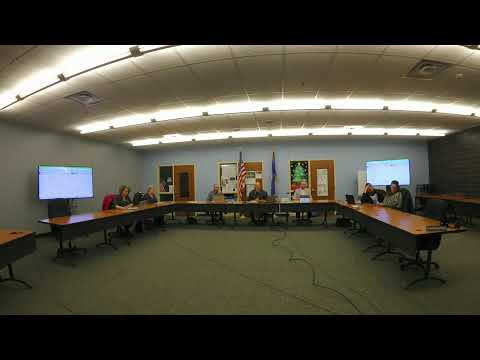
After a required truth‑and‑taxation presentation, the Tri‑City United School District board voted 6‑0 to certify a proposed levy payable in 2025 of $7,945,054.02, including $3,033,792.92 for maintenance, $140,482.54 for community service and $4,770,778.56 for debt service.
Dion, speaking for the district, presented the required truth‑and‑taxation information and said the district is proposing a 3.85% levy increase for taxes payable in 2025. “The overall proposed levy payable in 2025, we're looking at, $294,743.16 or 3.85%,” the presenter said while walking the board through revenue and expenditure comparisons.
The presentation explained that state funding increases have lagged inflation for years and that per‑pupil adjustments (a 2% state increase this year) do not close the gap. The presenter noted the district’s general fund represents roughly 78–79% of revenue and that salary and benefits account for about three‑quarters of expenditures. He said much of the current levy increase is driven by debt service shifts, and that the state will cover approximately $934,000 of the district’s debt service obligations.
At roll call, the board adopted the levy certification resolution (introduced by Chris Buscock) that formalized the levy amounts: maintenance/general fund $3,033,792.92; community service $140,482.54; debt service $4,770,778.56; total $7,945,054.02 to be levied in 2024 for collection in 2025. The resolution passed by a 6‑0 roll‑call vote.
Board members asked clarifying questions during and after the presentation about how market‑value changes affect individual taxpayers and the relationship between voter‑approved capital projects and the school portion of property taxes. The presenter reiterated that county assessments and state calculations (via MDE) influence individual tax bills and that the district has limited control over those market‑value effects.
The certification vote was the formal action expected under Minnesota law after the public presentation; the board approved the levy and moved on to other business.
The board will proceed to finalize the district budget next year; funds from this levy will be available for the 2025–26 school year.