Clark University pilots SEL curriculum, app and sensory room in Southbridge schools
Summary
Clark University and the Health Foundation of Central Massachusetts are piloting a five-year, $2 million initiative in Southbridge Public Schools that includes a ninth-grade SEL curriculum (MAX), a counseling app (My Peace) and a sensory immersion room; early signs include fewer classroom removals and improved counselor engagement.
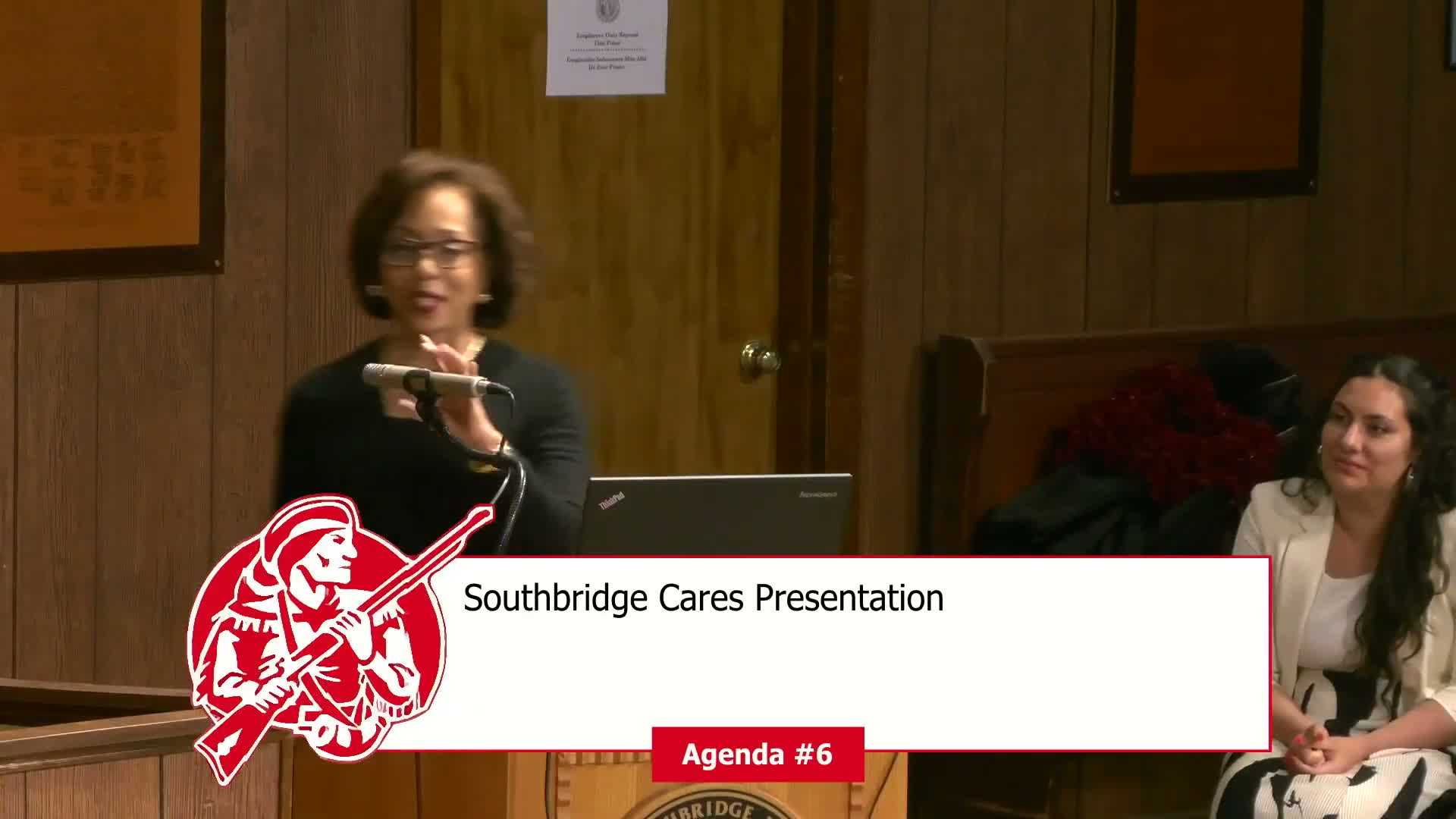
Dr. Nadia Ward, a professor at Clark University, told the Southbridge School Committee on Nov. 18 that Clark and the Health Foundation of Central Massachusetts are piloting a five-year, $2,000,000 initiative to support student behavioral health in Southbridge Public Schools. The plan calls for a planning year, a pilot year (current), multi-year implementation and a final evaluation in year five; if the grant is awarded Dec. 15, implementation would begin in January 2026.
The pilot includes three main interventions. First, the MAX social-emotional learning curriculum is being delivered as a tier-1 program to all ninth graders. "The MAX is a SEL program" that emphasizes five pillars — self-awareness, self-management, social awareness, relationship skills and responsible decision-making — and Clark undergraduate facilitators join Mr. Buchanan, the health and wellness teacher, in twice-weekly classroom sessions, Dr. Ward said. Students also take a campus visit to introduce early college awareness.
Second, the My Peace mobile application provides mental-health literacy, feelings check-ins, universal screening tools, a social services directory by ZIP code and digital coping tools. Dr. Ward said the app also offers an administrator dashboard for progress monitoring and analytics so schools can "keep their finger on the pulse" and measure trends and recidivism in student behavioral-health indicators.
Third, Clark installed a sensory immersion room described as a tier-2/3 intervention that can be customized to a student's sensory profile (sound, visuals, scent and other parameters). Dr. Ward said counselors reported early improvements after about four weeks, including fewer classroom removals and students arriving earlier to meet with counselors: "They felt calm. They felt, you know, regulated." She also said counselors reported feeling more effective when working with students in that space.
Clark is using a consecutive-cohort evaluation design: each incoming cohort of ninth graders receives the interventions while current juniors form a comparison group. Dr. Ward described the model as intentionally structured to produce usable outcome data on attendance, disciplinary incidents, classroom engagement and academic measures. "So by the time we're done with the project in three years from now ... we will have implemented the program with all students in at the high school level," she said.
Ward also noted workforce development efforts tied to the project: Clark launched a master's program in school psychology this fall and highlighted local interest from a current staff member who may enroll and return to work in the district. The committee thanked Dr. Ward and signaled interest in regular updates; Dr. Ward said she looks forward to presenting outcome data as the pilot continues.
Next steps: the committee will monitor the pilot and expects implementation planning to start in January 2026 if the grant is awarded; staff will return with more detailed progress and data in future meetings.