Planning board presses Rembrandt Villas hotel team on wells, traffic and wastewater; hearing continued
Loading...
Summary
The Rhinebeck Planning Board continued the public hearing on the Rembrandt Villas/White House LLC hotel project to Jan. 6 after residents and board members pressed the applicant for clearer traffic, well‑capacity and wastewater‑treatment information required for CEQR/SEQR review.
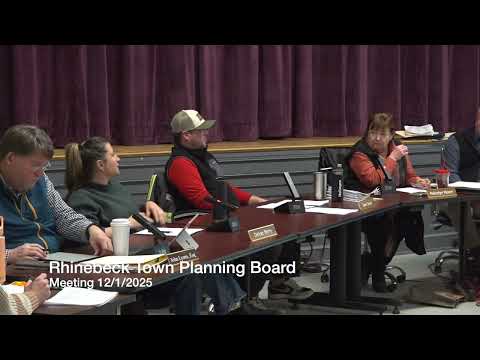
The Rhinebeck Planning Board on Dec. 1 continued the public hearing on the proposed Rembrandt Villas hotel after residents and board members raised detailed concerns about traffic, groundwater and the proposed wastewater treatment system.
At the meeting, applicant representative Sean Kemp said the project team will supply outstanding materials requested by the board and consultants. Multiple residents urged the town to secure a traffic study or independent review, with one longtime resident, Eleanor Leiter, saying she had tried to prompt state attention: "I called them. I wrote to them twice," she said, describing repeated attempts to get DOT to review a dangerous intersection at Middle Road and Route 9G.
Board members and members of the public focused at length on well capacity and testing. Planning staff and the applicant discussed daily and maximum well production figures included in the submittal documents; the application lists an average daily demand and a higher maximum demand used for permitting. As the applicant’s representative noted, "The numbers that ... the required, gallons that need to be produced from the well are dictated by outside agencies." That point underscored the technical complexity residents sought to probe further, particularly whether the well can meet peak hourly demands for a 60‑room hotel.
Traffic jurisdiction was repeatedly flagged as a complicating factor. The board told residents and the applicant that New York State Department of Transportation approval is required for outboard road work and that DOT has reviewed the project conceptually; the planning board nonetheless asked for more detailed crash and visibility analyses and suggested the town’s consulting engineer or a neutral traffic specialist review applicant materials.
Neighbors and board members also demanded more specifics about the wastewater system. The applicant provided a representative equipment cut sheet but not full engineering plans for the treatment plant. Board members requested renderings or a 'worst‑case' visual of the treatment plant with the proposed screening so the board and neighbors can judge possible visibility and aesthetic impacts along Route 9G.
The board offered a path forward: residents were invited to submit written questions and the board said it could engage its consulting engineer, CPL, to review applicant materials and present findings at the next session. The planning board voted to continue the public hearing to Jan. 6 to allow the applicant to submit the requested materials and for the board and consultants to review them.
Next steps: the applicant must provide the outstanding traffic, well‑testing and wastewater‑treatment details identified in the meeting; the board flagged the possibility of requesting additional technical reviews by the town’s consultants before the next public hearing.