Get Full Government Meeting Transcripts, Videos, & Alerts Forever!
Get email alerts on the Legislative Panel Special Education topic
No spam. Unsubscribe anytime.
State legislators tell PSD board fiscal limits constrain new programs; they back licensure reciprocity and explore statewide IEP system
Summary
State lawmakers told the Poudre School District board that Colorado faces large budget shortfalls under TABOR and urged exploring targeted, low‑cost fixes like licensure reciprocity; legislators expressed interest in a statewide IEP platform but cautioned about its fiscal cost and discussed voucher/SGO risks.
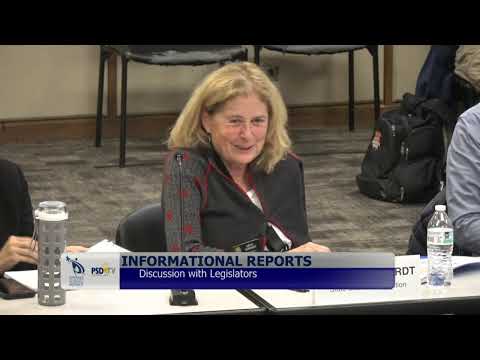
State legislators and state education officials met with the Poudre School District R-1 Board of Education on Nov. 18 to discuss special education, workforce recruitment and broader funding constraints.
Dr. Jody Rommel, PSD’s director of integrated services, asked for support on workforce recruitment and retention and for consideration of a statewide IEP platform to reduce paperwork and improve compliance. "These funds [ERR] help us with our braided funding model that continues to produce highly trained special educators," Rommel said, noting PSD has 18 candidates in the current cohort, 12 of whom are district paraprofessionals.
State Senator Kathy Kipp and others described recent steps to ease licensure barriers (interstate compacts and teacher apprenticeship recognition) and urged pragmatic, low‑fiscal reforms because the state faces revenue pressure. Senator Kipp noted the state is coping with multibillion-dollar shortfalls tied to the Taxpayer's Bill of Rights (TABOR) and cited adequacy studies that estimate the state is about $3.5–$4 billion short of providing an 'adequate' education under current standards.
On a statewide IEP platform, legislators expressed interest but warned it would require investment. "It can address a lot of workload issues, but that one is free like a puppy — which means it's not free at all," Superintendent Brian Kingsley said, summarizing the trade-offs identified by staff.
Panel members also discussed scholarship-granting organizations (SGOs) and the potential for federal or state‑level voucherization. State board and legislative representatives urged vigilance, flagged examples from other states where voucher programs shifted students and funding away from traditional public schools, and asked the district to consider how best to protect equity and district assets.
Lawmakers and board members explored strategies including targeted rule changes, coordinated district resolutions, and public education campaigns to explain complex budgetary constraints to voters. Several legislators offered to meet with district staff and visit schools to better understand local needs.
The meeting adjourned at 7:43 p.m.