Get Full Government Meeting Transcripts, Videos, & Alerts Forever!
Get email alerts on the Traffic Safety topic
No spam. Unsubscribe anytime.
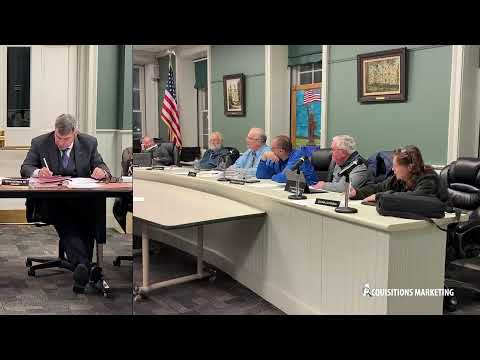
Board presses Salamoni concrete plant on left‑turn mitigation, monitoring and $25,000 fair‑share
Summary
Engineers for a proposed concrete plant at 9 Musket Court told the Goshen Planning Board AASHTO warrants do not require a left‑turn lane but offered a detour/no‑left‑turn policy, a 12‑month monitoring plan and a $25,000 fair‑share payment; board asked for clearer enforcement, possible bond language and DOT sign‑off before approval.
Engineers for Salamoni Ready‑Mix presented traffic findings and mitigation offers for a proposed concrete manufacturing plant at 9 Musket Court, telling the Goshen Planning Board that left‑turn lane warrants are not met at the Route 17M–Muscat Court intersection but that targeted mitigation is possible.
John Sebelero, traffic engineer at Stonefield Engineering and Design, said the project’s trip generation and sight‑distance analysis meet AASHTO guidelines and that the intersection crash rate is below the state average. He described three mitigation conditions the applicant would accept: a contractual detour and prohibition on left turns into the site, a 12‑month traffic monitoring plan (TMP) after the site opens, and a $25,000 fair‑share contribution to other Route 17M intersection improvements.
The board expressed skepticism about relying on a voluntary no‑left‑turn restriction and pressed the applicant for enforceable language. One planning member suggested a bond to fund construction of a left‑turn lane if future monitoring showed a safety problem; applicant engineers pushed back that a monitoring program should be scoped to count project‑generated trips, while board members said corridor‑wide counts may be needed to judge cumulative impact.
Town staff and the applicant agreed on next steps: confirm crash‑history data with the town traffic reviewer, refine the TMP scope to make attribution and enforcement practicable, and, if necessary, obtain formal correspondence from the New York State Department of Transportation where proposed work or right‑of‑way changes are implicated. The board did not take a final vote on the site plan and asked the applicant to return with written traffic‑monitoring protocols, any proposed bond language, and documentation of DOT coordination.
What happens next: The applicant will coordinate with town consultants to finalize monitoring scope and provide any DOT correspondence; the Planning Board said it expects to see the refined mitigation package before making a final decision.