Get Full Government Meeting Transcripts, Videos, & Alerts Forever!
Get email alerts on the Student Safety topic
No spam. Unsubscribe anytime.
Tigard‑Tualatin board approves comprehensive substance‑use prevention plan with one abstention
Summary
The board approved the district’s comprehensive substance‑use prevention and intervention plan after staff described survey results, layered prevention (SEL, Teen Intervene), naloxone availability and staff training; the motion passed with three yes votes and one abstention.
The Tigard‑Tualatin School District board voted to approve a comprehensive substance‑use prevention and intervention plan after staff presented data from the district student health survey, program components and referral pathways.
Dr. Stave, the district’s mental‑health and wellness coordinator, and district staff described the plan as a multi‑layered effort that combines classroom prevention, social‑emotional learning, targeted interventions and community referrals. The presentation noted student survey findings: “13 percent of our students reported any lifetime use of alcohol,” 5.7 percent reported lifetime marijuana use, and middle/high school vaping rates were split by grade; staff said those rates are lower than state averages.
The plan formalizes staff roles, extends Teen Intervene screening and referral work led by social workers, integrates state ODE fentanyl and opioid supplemental lessons, and requires an annual review once approved. The presenter summarized mental‑health indicators and protective factors: a majority of students report a trusted adult at school and the district emphasized upstream prevention and family engagement.
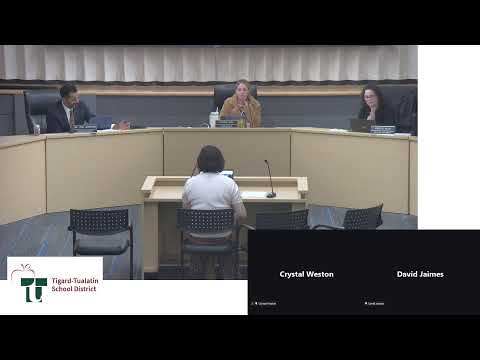
Director Miles moved to approve the plan and Director Jaime seconded. Director Weston said she would abstain because she was not comfortable voting without more information; the clerk recorded three votes in favor and one abstention.
Board members discussed program choices and evidence‑based approaches; one director urged attention to social‑norms and cognitive‑behavioral strategies in addition to behavioral‑health models. Staff said required staff training and an annual review process will accompany implementation.
What’s next: staff will implement the staff training components this year and include the plan in annual classified staff trainings next year; the board will receive implementation updates as part of routine reporting.