Monroe-Woodbury details $98 million capital program; district says work will not raise taxes
Summary
District and the Palumbo Group briefed the board on the 2023'025 capital program, describing about $98 million in projects funded by a $24 million capital reserve, state building aid and other sources; administrators said an additional $16 million would add air conditioning to three elementary schools without a tax increase.
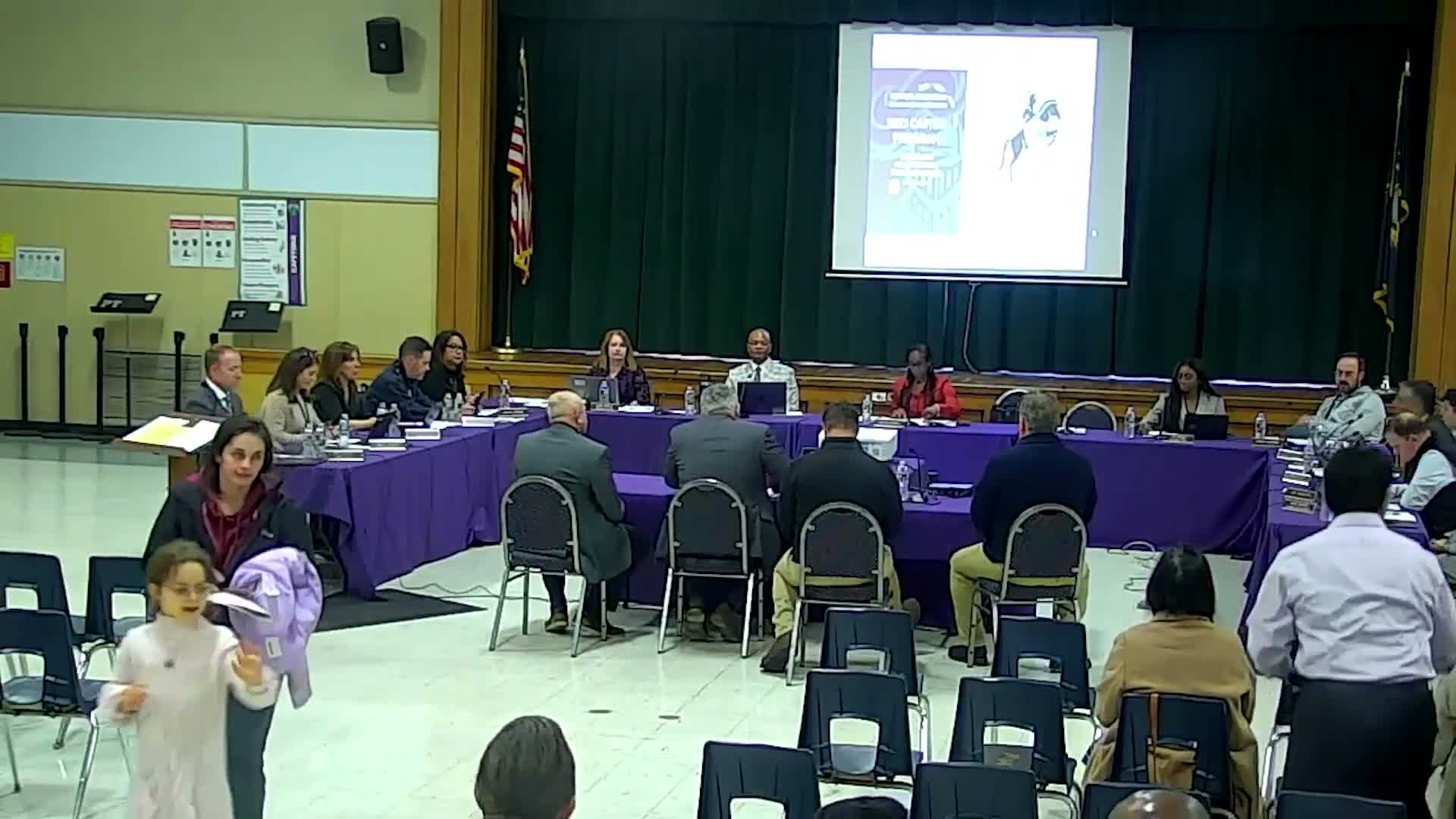
Patrick Cahill, the district's assistant superintendent for business and management services, told the Monroe-Woodbury Central School District Board of Education on Wednesday that the voter-approved 2023 capital referendum funds a broad program of building work with no immediate tax impact.
"We were able to do that and plan that with no tax impact," Cahill said, summarizing the district's financing plan and noting the role of an established capital reserve.
The presentation by the Palumbo Group, the district's construction manager, described the referendum as authorizing roughly $98,000,000 for dozens of individual projects across schools. Cahill and Palumbo representatives said the district has used about $24,000,000 from a capital reserve and expects to receive substantial state building aid; Palumbo's presenters said the district receives "approximately 70% back for every dollar we spend in capital work."
Why it matters: The program covers deferred maintenance and systems replacement districtwide, addressing roofs, boilers, heating and ventilation upgrades, repointing, security vestibules and other building envelope work. District leaders said adding central air conditioning to three elementary schools ' North Main, Pine Tree and Central Valley ' was a cost-effective addition during this capital cycle.
Palumbo's project manager, Scott Butler, said the district identified about $16,000,000 in additional work to provide full central air conditioning to the three elementary schools, funded in part with approximately $5,000,000 from the district's reserve and state aid expected to cover most of the eligible costs.
Design and schedule: Palumbo said phases 1 and 2 are roughly 50% design-approved by the New York State Education Department; the team plans to submit phases 3 and 4 before year-end with the intent to be shovel-ready in 2026 and to continue work in summers and second shifts through 2029. Near-term projects mentioned included Central Valley mobilization, tennis-court replacement, a planned high-school concession building, and upgrades to the high-school fire alarm and public-address systems.
Construction management and safety: Palumbo described biweekly progress meetings with administrators, contractor background checks, site badging and second-shift work to limit disruption. The presenters said some work ' such as conversions from steam to hot-water heating and switching fuel sources ' will be multi-summer efforts requiring staging and classroom rotation.
What remains uncertain: The presentation noted scope changes and change orders have appeared during work; board members asked for executive summaries of long change-order documents to speed review. District staff said explanatory memos were available with executive documents. Specific contract award dates and final bid amounts for some upcoming packages were not provided at the meeting.
Next steps: The board will receive subsequent updates as Palumbo advances design approvals with the state and as bids are prepared and issued. "We are just rounding the corner here, finishing phase 1," a Palumbo representative said, and the district expects to proceed with coordinated summer construction to limit classroom impact.