Get Full Government Meeting Transcripts, Videos, & Alerts Forever!
Get email alerts on the Pretrial Evidence Motions topic
No spam. Unsubscribe anytime.
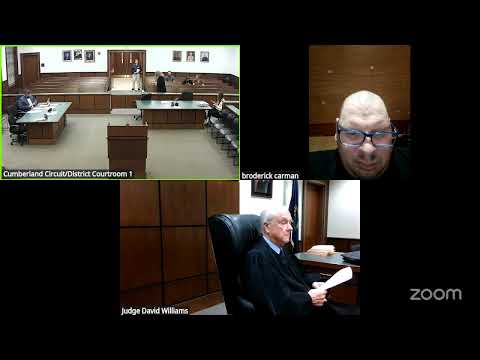
Court hears evidence motions in O'Donnell case; geolocation expert report deadline set
Summary
During pretrial motions in Commonwealth v. Thomas O'Donnell, defense sought to exclude luminescent-test evidence and firearms/gambling references; the judge declined broad exclusion and ordered the prosecutionto produce a geolocation expert report by December for defense review.
The court considered several motions in the Thomas O'Donnell matter, including challenges to evidence recovered from a Toyota Tundra and related firearms and grand-jury references.
Defense counsel asked the court to exclude evidence that luminesced under a blood-detection chemical (referred to as BlueStar) from the truck and to bar certain firearms- and gambling-related material from grand-jury testimony. The attorney argued that the luminescent swabs produced no blood results and that other items risked unfair prejudice.
The prosecutor responded that investigators used the chemical to guide testing and that the resulting evidence and location information were relevant to the investigation. The prosecution also explained its theory connecting a .45-caliber pistol (allegedly formerly owned by Michael Harding) to a theory that the firearm might represent payment related to the victim, while acknowledging a .308 rifle would not be used and the .308 could be excluded as not relevant.
The judge indicated he would not broadly exclude the luminescent-location evidence and allowed the court to hear motions one at a time; he sustained some objections and overruled others on relevance grounds. The court also addressed motions concerning grand-jury references to gambling; the judge noted that a foundation would be required to make such references admissible.
Separately, defense counsel raised the prosecution's geolocation expert report, saying it had not been produced. Prosecutors said an FBI agent was preparing a peer-reviewed geolocation report and expected to produce it by December; the judge set the deadline and said parties should return to court if the report is not produced, indicating the court may consider additional relief if necessary.
The court's rulings preserved the prosecution's ability to present location and firearms-nexus evidence while requiring the prosecution to produce its expert report on a near-term schedule so the defense can prepare for trial.
Next procedural steps include the production of the geolocation report by the stated deadline and additional in limine hearings as needed; the court emphasized that piecemeal filings should be consolidated to minimize repeated court appearances.