Get Full Government Meeting Transcripts, Videos, & Alerts Forever!
Get email alerts on the Public Works topic
No spam. Unsubscribe anytime.
After heated hearing, commissioners formally establish County Road CR 402 by prescription; residents voice safety and easement concerns
Summary
Following a public hearing with multiple ranchers and residents expressing worries about livestock safety, maintenance and mapping, the board voted to adopt Resolution 48‑25 establishing County Road CR 402 (Bates/Bees/Base Creek area) as a county highway by prescription; legal counsel said the statutory process requires the term ‘highway.’
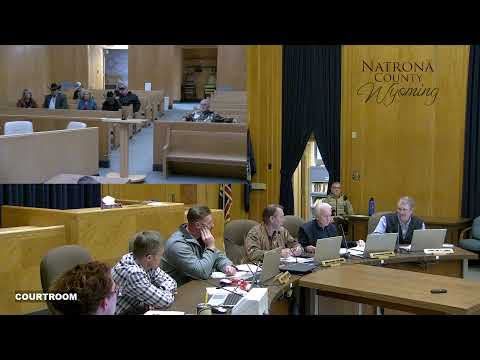
The Board of County Commissioners held a contested public hearing on Resolution 48‑25 to establish County Road CR 402 (commonly called Beech/Bates/Base Creek Road in public remarks) as a county highway by prescription. Multiple nearby landowners and ranchers addressed the board, raising safety concerns about speeding, livestock collisions, reduced privacy, and the potential for paving or wider easements.
Resident Justin Johnson said the change would bring more traffic and safety worries: "They already drive too fast on the gravel road anyways... It's supposed to be 25 miles an hour, and they go at least double that all the time." Another speaker, Steve Garrett of Garrett Ranch, expressed concern about GPS routing and the label "highway," saying in his view highway implies paving and greater traffic.
County staff and legal counsel explained the motion was a statutory process to create a public highway by prescription (adverse possession/common law prescription) and that the statutory language uses the word "highway" even when the practical result remains a gravel road with existing width. County staff said the primary purpose was to record and protect legal access and documented easements where historical use had not been properly recorded.
Commissioner debate focused on statutory language and practical outcomes; some commissioners asked staff to clarify maintenance obligations and whether designating the route as a highway would require paving or expansion. Legal counsel noted the board may follow the statute’s prescribed language and that the designation clarifies public rights and helps avoid future litigation over access. After discussion, Commissioner Nicholas moved to adopt the resolution (with minor phrasing edits suggested for clarity); the motion carried by recorded voice vote.
The record notes the board will continue similar reviews for other county roads where recorded easements or legal access documentation is incomplete.