Get Full Government Meeting Transcripts, Videos, & Alerts Forever!
Get email alerts on the School Facilities topic
No spam. Unsubscribe anytime.
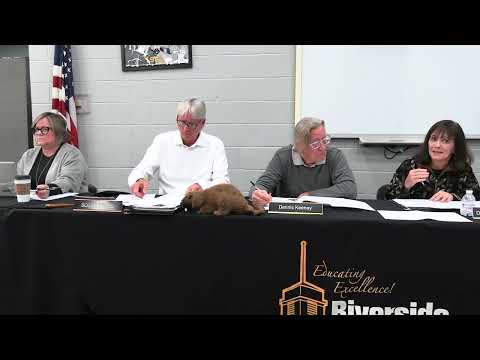
Riverside board votes to expand Buckeye funding after months of study; amendment to limit classrooms fails
Summary
After lengthy debate about wetlands, parking and feasibility, the Riverside Board approved amended financing to expand work at Buckeye Elementary and related projects. An effort to cap additional classrooms at eight did not bind the final financing resolution; the board approved the financing measure 4-1.
The Riverside Board of Education approved an amended financing resolution to increase the district's possible lease-purchase issuance for Buckeye Elementary renovations and related projects, the board recorded in a 4-1 roll-call vote. The measure adjusts previously authorized amounts and keeps options open for additional classrooms and interior renovations while staff collect feasibility data.
The vote follows more than an hour of discussion about how large an issuance the district should seek and which components should be guaranteed now versus decided after engineering and green-space studies. The treasurer, in a November presentation to the board, said the district's cash and liquidity were "in really solid shape," but warned that state law changes such as House Bill 920 are constraining long-term revenue (treasurer presentation starting SEG 886). Board members and the district's owner's representative repeatedly urged detailed traffic, wetlands and site feasibility work before committing to any expansion beyond the board's original plan.
Why it matters: Buckeye Elementary serves neighborhood students and has been identified for improvements of classrooms, a gymnasium and mechanical upgrades. The discussion focused on whether additional funds (board materials discussed a potential $15 million issuance) could be used to complete a full renovation now or whether the district should phase work and rely on follow-up studies to define the final scope.
What the board debated: Board members and contractors described site constraints including a probable wetland designation that reduced usable acreage, detention and stormwater concerns and limits on expanded parking. The architect/owner's representative said an 8-classroom plus full gym plan fits current field and parking limits, while some design estimates suggested up to 10 classrooms could fit under certain layouts. One board member proposed an amendment to the financing resolution to explicitly limit the issuance to fund "8 additional classrooms." That amendment was discussed, moved and seconded for debate but did not become a binding limitation on the final financing resolution; board counsel and bond counsel advised the board that final specifications and approvals would occur during later phases such as schematic design and the guaranteed maximum price (GMP) approval.
Votes and next steps: The board approved the amended financing resolution (roll call recorded as 4-1). The treasurer said staff will compile existing feasibility materials and solicit additional studies (traffic, wetlands and green-space) so that any later decisions on additional classrooms or larger interior renovations are data-driven. If the district moves forward with a larger renovation, staff said much of the interior work could be scheduled over two summers to limit disruption to students.
Representative remarks: The treasurer summarized the financing options and the implications for the district's permanent improvement (PI) levy, warning of the long-term obligations associated with Certificates of Participation ("COPS") and Tax Anticipation Notes (TANs). A public commenter criticized board behavior at length from the podium; those remarks are recorded in the public-comment section and did not alter the board's vote.
Votes at a glance: amendment to agenda to add the financing discussion (passed 4-1 to add to the agenda); motion to approve the amended financing resolution (passed 4-1). Specific purchase approvals and consent items are recorded separately in the meeting minutes.
What happens next: Administration will gather and present feasibility and traffic studies and provide schematic designs to the board. Any specific construction approvals and GMPs will return to the board for separate votes before firm expenditures are committed.