Get Full Government Meeting Transcripts, Videos, & Alerts Forever!
Get email alerts on the Planning Board Training topic
No spam. Unsubscribe anytime.
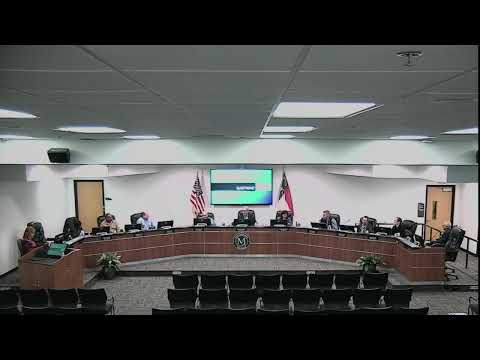
Mooresville planning-board training reviews duties, conflicts and local traffic concerns
Summary
Planning-board members attended a training session focused on statutory limits, open-meeting and public-records obligations, conflicts of interest, and how to weigh rezonings; members asked staff to identify by-right capacity and evacuation risks for the Brawley School Road peninsula.
Mooresville — Planning-board members spent a training session reviewing their advisory role, legal limits and meeting best practices and pressed staff for more analysis of local traffic and by-right development near Brawley School Road.
The presentation, delivered by a planning-department staff member identified in the transcript as Speaker 3, emphasized that the planning board is advisory: "you provide written recommendations to the governing board," the presenter said, and noted that local governments in North Carolina only exercise powers granted by state statute. The presenter also warned that "board members can be held personally liable for attorneys' fees for a knowing or intentional violation of the Open Meetings laws."
Why it matters: the training outlined how the board should craft statements of reasonableness and evaluate rezonings and text amendments so decisions are defensible if challenged in court. Speaker 3 instructed members to cite the comprehensive land use plan when framing recommendations, to consider the character and suitability of districts, and to avoid impermissible considerations such as race, religion or familial status.
Members raised several local issues during the discussion. Speaker 4 asked staff to prepare information on how much county-owned land remains in the Brawley School Road "peninsula," what is zoned by right and whether existing two-lane access could create evacuation or congestion problems if substantial multifamily development proceeds. Speaker 4 framed the request as a planning concern tied to public safety and infrastructure capacity; Speaker 3 said such information could be used in the board's deliberations when tied to public-safety or public-interest rationale.
The session also covered the distinction between conditional and conventional rezonings. Members recalled a recent case where a conditional rezoning added vape shops to allowable uses for a parcel; the group urged staff to clearly flag any uses that are being added conditionally so the board can see what is being requested versus what exists in the UDO.
Speaker 3 reiterated guidance on conflicts of interest and ethics: disclose potential conflicts early, recuse when a matter would have a "direct, substantial and readily identifiable financial impact" or when a close familial or business relationship could compromise impartiality, and avoid accepting monetary gifts; the transcript records a nonmonetary limit mentioned at $15.
Votes at a glance: The board adopted the meeting agenda, approved minutes as presented and adjourned by unanimous voice votes as recorded by the chair; no land-use decisions or formal recommendations were taken during the training.
Board members left the session asking staff for clearer advance recommendations and greater transparency in agenda materials (for instance, calling out any uses that applicants add as part of conditional rezonings) and for analysis of parcel ownership and by-right development capacity in the Brawley School Road node ahead of future projects.
The planning department presenter provided staff contact names and suggested resources including the School of Government for additional land-use guidance. The board adjourned after the closing motion and second.