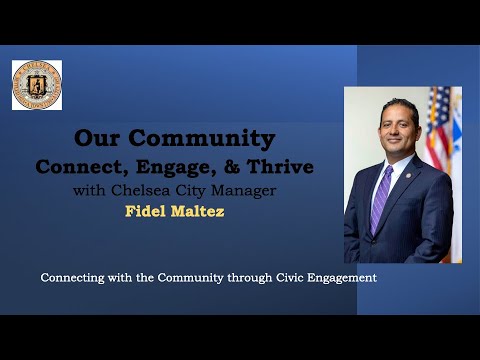
Chelsea city administrator urges development over tax increases to fund master-plan goals
Loading...
Summary
City Administrator Fidel Maltés told Chelsea residents that the city faces a choice: ask voters to raise taxes or grow revenues through economic development. He presented development as the preferred path to fund housing, jobs, parks and transportation identified in the 'Chelsea Palante' master plan.
City Administrator Fidel Maltés spoke directly to Chelsea residents in a community address about how the city should pay for priorities laid out in the Chelsea Palante master plan, saying the city faces two clear choices: ask voters to raise taxes or expand economic development to increase recurring revenue without raising tax rates.
Maltés framed the challenge as partly legal: "Hay una ley en Massachusetts, la proposición 2 y medio," he said, referring to the state limit on annual property-tax increases. He said tapping the city’s reserves to pay for the plan would "agotar nuestro fondo de emergencia" and could expose Chelsea to long-term financial risk.
To avoid either outcome, Maltés proposed pursuing development that raises assessed property value. Using a hypothetical example, he said a new $5,000,000 project would yield new recurring revenue when its added value is multiplied by the prior year tax rate. "El desarrollo económico es fundamental porque aumenta los ingresos de la ciudad sin subirle los impuestos a nuestros residentes," he said.
Maltés listed the priorities residents identified through Chelsea Palante — more affordable housing; safer, healthier neighborhoods; better jobs; more parks and green space; greater access to rivers and the waterfront; and improved citywide transportation — and argued those priorities require investment beyond current budget capacity.
He presented economic-development benefits as both fiscal and job-creating, saying each job tied to new development supports other local employment in construction, maintenance and transport. He also cited local figures from his remarks: he said the average income in Chelsea is about $69,000 (roughly 63% of Boston households’ earnings) and that the city has lost about 1,300 jobs over the last five years.
Maltés emphasized Chelsea’s industrial base — light manufacturing, vendors, logistics and waterfront operations — as assets the city can reinforce, and he pointed to vacant lots and long-empty buildings as near-term opportunities for reuse and redevelopment.
He repeatedly framed development as a way to grow revenue without displacing current residents: "El desarrollo económico es la forma más efectiva de generar nuevas oportunidades sin desplazamiento," he said, urging a strategy that "ponga a trabajar nuestros terrenos y propiedades" that are not in use.
Maltés closed by asking residents to participate in community meetings, to ask questions and to hold city leaders accountable so local voices can shape projects under Chelsea Palante. No formal votes or motions were announced during the address; Maltés presented options and a preferred direction but did not propose a specific ballot question or ordinance.
Next steps: Maltés invited residents to upcoming community meetings to shape development priorities — dates and formal proposals were not specified in the address.