City study session: short strips of pavement to revert from ADOT; city to assume maintenance
Loading...
Summary
At a Dec. 1 study session, a presenter summarized an ongoing process with ADOT to return short asphalt segments (roughly 100 feet) at interchanges to the city so Mesa can maintain a continuous roadway surface; the change aims to eliminate small unrepaired gaps left after state projects.
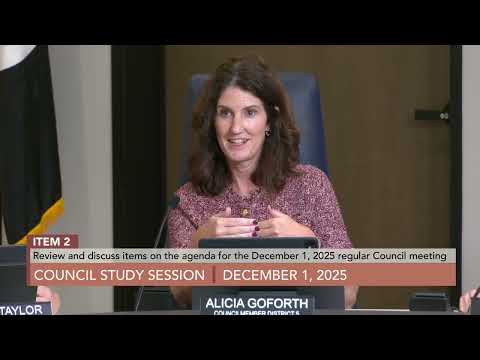
An unidentified speaker at the City of Mesa study session on Dec. 1 explained that the Arizona Department of Transportation (ADOT) is reverting small strips of asphalt at freeway interchanges to the city so the city can assume maintenance and avoid gaps in repairs.
The speaker described a recurring situation in which ADOT constructed more right-of-way than ultimately needed during freeway projects, then later transfers narrow asphalt segments to municipal control. “It’s about a 100 feet of that asphalt that they’re turning back over to us that we’ll maintain,” the speaker said, adding that in the past residents complained when repaving left a short, unrepaired stretch near intersections — “you fix the road except for the last, you know, 200 feet.”
According to the explanation, the city’s practice is to take its asphalt up to the concrete edge of the interchange or to the interchange fence line to avoid leaving mismatched pavement surfaces. The speaker referenced a prior large-scale repaving after work on U.S. 60 two or three years ago as an example of similar coordination between ADOT and the city.
Council members asked clarifying questions about the exact extent of the strips; the presenter reiterated the typical demarcation points are where ADOT’s interchange concrete meets the city’s asphalt. The transcript indicates these specific transfer parcels are two of the last remaining cases the city expects to accept in this cleanup process.
Next steps noted in the study session: the matter is slated for introduction and further conversation at the council meeting schedule referenced for the coming week; no formal council action on accepting the reverted segments was recorded during the study session.
Why it matters: accepting short sections of pavement into city maintenance can reduce recurring complaints about partial repairs at interchange edges, improve safety and maintenance efficiency, and clarify long-term maintenance budgets and responsibilities.