Get Full Government Meeting Transcripts, Videos, & Alerts Forever!
Get email alerts on the Municipal Budgeting topic
No spam. Unsubscribe anytime.
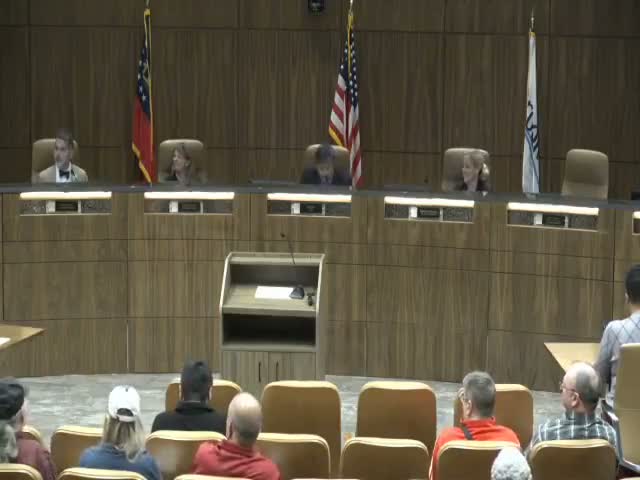
Brookhaven council removes millage cap and adopts 2026 budget after extended public comment
Summary
After more than two hours of public comment, Brookhaven City Council voted unanimously Nov. 18 to amend the city charter to remove its voter-approved millage cap and then adopted the city manager's recommended 2026 operating and capital budget. Residents urged a referendum; council members said fiscal realities made the change necessary.
Brookhaven City Council voted Nov. 18 to amend the city charter to remove the voter-approved millage cap and then adopted the city manager's recommended 2026 operating and capital budget.
Mayor John Park opened the meeting's public hearing on the proposed 2026 budget and fielded questions from council members about unfunded staffing requests and protections for seniors. City Manager Christian Sigman told the council departments had submitted more than $1,200,000 in legitimate requests that could not be funded within the recommended revenue forecast and that roughly 10'12 new positions were not included. Sigman identified major cost drivers as contracted 911 services (a roughly $1.3 million increase), replenishing general-fund reserves and rising employee health-care and compensation costs.
Multiple residents urged the council to put any change to the millage cap to a citywide vote. Lauren Kiefer, a Drew Valley resident, asked the council to "let the citizens of Brookhaven vote on this measure," warning of legal risk and recommending broader outreach beyond the city website. Dozens of other speakers raised similar concerns about large capital projects and perceived overspending on the new city center, park fencing and a planned pedestrian bridge, and several urged a third-party audit before any charter change.
Council members and staff, however, framed the decision as an exercise of home-rule authority. City Attorney Jeremy Berry, joining by Zoom, said the city has statutory home-rule authority to amend its charter unless state law preempts the issue; Sigman and the mayor said the homestead-exemption matter remains subject to state law and a referendum but that the millage cap itself is within the council's charter-amendment authority. Sigman noted the proposed senior exemption increase (from an assessed-value exemption of $160,000 to $200,000, market value roughly $500,000 to $600,000) would require state action and a referendum and therefore would not take effect until tax year 2027, leaving a potential one-year gap affecting about 1,000 eligible owners.
After extended discussion the council took a motion to approve Ordinance 7431, the charter amendment removing the cap. The motion was moved and seconded and the council recorded the motion as passing unanimously. The body then considered and adopted Ordinance 7420, the fiscal-year 2026 budget ordinance, which the clerk also recorded as passing unanimously.
Council members who supported the change said delaying action would force recurring cuts to services residents value, including parks maintenance and public safety, and that modest tax increases would preserve service levels. Opponents in the audience said removing the referendum requirement broke a foundational promise of the city charter and warned of litigation.
The mayor closed by inviting constituents to review materials at City Hall and in private meetings: "My phone number is (404) 822-7059," he said, and offered staff time to go through budget details.
The council then moved on to other agenda items.