Lenoir City council reviews proposed 0.75‑point sales tax to fund Habitat repairs and parks expansion
Loading...
Summary
City officials and a local Habitat for Humanity affiliate described a proposed 0.75 percentage‑point sales tax (about 75¢ per $100) that organizers estimate would raise roughly $4 million a year, with about $1 million proposed for Habitat‑run critical repairs and preservation programs and the remainder to parks and recreation needs; public hearings are scheduled for Dec. 8 and Dec. 29.
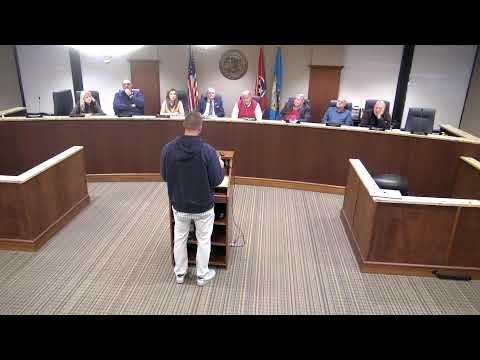
Lenoir City council members heard a presentation on a proposed local sales tax referendum that would raise funds for a partnership with a local Habitat for Humanity affiliate and for parks and recreation improvements.
Mayor (name not specified) opened the workshop by outlining a potential ballot measure that would add about 75¢ on a $100 purchase (a 0.75 percentage‑point local sales tax increase). The mayor said organizers estimate the measure could generate roughly $4,000,000 annually and that a portion—about $1,000,000—would go to the Habitat affiliate to support critical repairs, aging‑in‑place work and preservation of affordable housing. She stressed that the city council would only authorize placing the question on the ballot; the tax itself would be decided by voters.
Tony Davis, who introduced himself as executive director of Southern County Habitat for Humanity, told the council the local affiliate currently runs on an annual budget of about $2.5–3.0 million and that an additional $1 million a year would be “a game changer” for expanding critical repairs and rebuilds. “One million dollars a year would be a game changer,” Davis said, describing how unrestricted local funds could be layered with capped grants to address larger repair needs.
Rachel Rendon, identified as the affiliate’s development director, cited U.S. Census‑based statistics showing an aging housing stock in Lenoir City, with roughly half of homes more than 50 years old and seniors making up about a quarter of the city’s population. Rendon said those demographics, combined with an average new‑home price she said is near $530,000, leave many lower‑income and fixed‑income households vulnerable to unsafe housing conditions.
Presenters and staff emphasized how most grant sources have per‑address limits (often cited around $15,000) that leave larger or compounded repair needs unmet; they said a locally sourced, flexible fund would allow the affiliate to coordinate multiple funding streams and address safety and accessibility work that current grants cannot fully cover. The affiliate described program safeguards including a five‑year restrictive covenant on significant repair investments so that funds are recycled into the program if a household sells early.
Parks and Recreation staff described pressure on local facilities—crowded fields, limited gym space, and growing program participation—and presented results from a city survey in which roughly two‑thirds of respondents said they would prefer a sales tax increase to fund parks improvements. Staff said current staffing and facility capacity make many popular programs difficult to sustain without new revenue.
Council members asked technical questions about program eligibility and ongoing maintenance. Presenters said senior‑focused services generally ask seniors to provide modest in‑kind contributions (for example, providing water or welcoming volunteers) rather than full “sweat equity” requirements used for new‑home construction, and that repeated major follow‑up work on a single address is constrained by existing grant rules unless funds are strategically combined.
No formal action was taken at the workshop. Mayor (name not specified) confirmed the city intends to hold a first reading and public hearing on Dec. 8 (public comment at 5:30 p.m., council meeting to follow) and, if needed, a continuation or additional hearing on Dec. 29. Organizers told the council they plan follow‑up public outreach and question‑and‑answer sessions to explain how the ballot measure would work if placed before voters.
What’s next: the council will consider whether to put the referendum on the May ballot at its scheduled December readings and hearings; if the council votes to place it on the ballot, the final decision will rest with Lenoir City voters.