Get Full Government Meeting Transcripts, Videos, & Alerts Forever!
Get email alerts on the Water And Subdivisions topic
No spam. Unsubscribe anytime.
Commissioners debate 7-lot cap, RU-2/RU-5 draft and moratorium as water concerns rise
Summary
Facing three recent subdivision applications of 20+ lots, commissioners discussed draft RU-2/RU-5 zoning language that would limit unincorporated subdivisions and require municipal connection or community water systems for developments above seven lots; staff and the state engineer highlighted legal water-right baselines, meters and enforcement gaps.
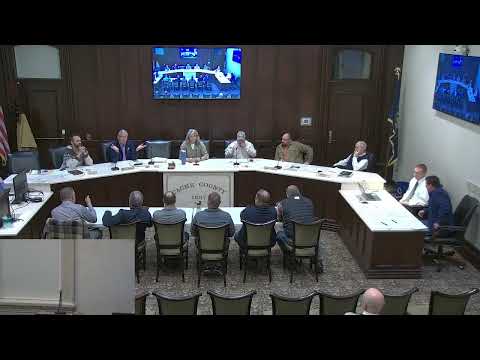
Cache County commissioners spent the second half of their meeting on groundwater, septic and subdivision policy, focusing on a staff draft that would tighten RU-2 and RU-5 rules, encourage annexation where appropriate and set a practical threshold of seven lots to avoid creating unregulated rural sprawl without municipal services.
Unidentified Speaker 8 opened the water discussion noting three recent subdivisions of 20 homes or more and asking planning staff to consider changes to RU-2 and RU-5 to prevent overconsumption of groundwater in unincorporated areas. The draft staff proposal discussed at the meeting would require smaller urban-style lots to be within a defined distance of municipal boundaries, and would generally require connection to a municipal water system (or a community water system) for subdivisions exceeding seven homes.
Skyler Buck, the state regional engineer, told the group that a September 1999 cutoff is significant for domestic water rights: parcels in existence before that date can claim a domestic water right; later splits generally must secure or purchase additional water rights. He also said meters are required on wells and that larger community systems typically must report totalized use to the state. "M >>y understanding... is September 1999 is the key date," Buck said, stressing the legal baseline planners must respect.
Public-health and emergency-service voices reinforced the planning concerns. Jordan Mathis (health department) described a Board of Health multiplier and a rule that, when lots are within a threshold to municipal sewer, applicants must request a sewer connection; municipalities sometimes refuse even when adjacent. A fire official warned that rural homes require far higher fire-flow rates now and that remote subdivisions without pressurized municipal water create life-safety and response risks.
Key proposals and clarifications from the meeting included: - A practical seven-lot cutoff tied to the state's requirement for a public water system: commissioners discussed leaving 7 lots as the threshold that would generally avoid classifying a development as a public water system, and requiring community water systems for larger subdivisions until a groundwater study is complete. - Test-well ("wet water") demonstration: commissioners asked staff to consider requiring applicants to drill and demonstrate a functioning supply as a condition before approval, mirroring Box Elder County practice. - Annexation coordination and covenants: commissioners debated whether approval should require a recorded agreement or covenant that owners will accept future annexation when the municipality’s annexation plan applies; staff cautioned the county cannot compel a municipality to annex but can require covenants that bind the title.
Outcome and next steps: Commissioners asked planners to present the RU-2 and RU-5 draft to Planning and Zoning for recommendation and signaled interest in either extending the current moratorium or ensuring concrete code changes are in place before the moratorium expires. No final ordinance was adopted at the meeting.