Get Full Government Meeting Transcripts, Videos, & Alerts Forever!
Get email alerts on the Solar Zoning topic
No spam. Unsubscribe anytime.
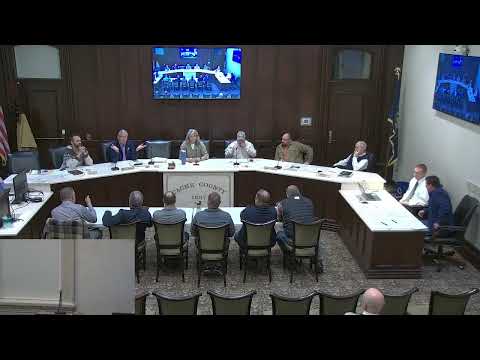
Cache County commissioners press planners to tighten rules for large-scale solar
Summary
Commissioners raised visual, reclamation and transmission concerns about proposed large-scale solar and asked planners to pursue corridor, size and industrial-zone options rather than a broad conditional-use approach; staff said a solar overlay and numeric caps are being drafted.
Cache County commissioners directed planning staff on Wednesday to tighten how large-scale solar farms would be sited and regulated, citing threats to valley gateways, farmland and long-term control over zoning. The group endorsed exploring a solar overlay or corridor approach and signaled support for treating major arrays as industrial uses rather than a simple conditional use in agricultural zones.
The discussion began after Unidentified Speaker 8 asked the planning commission to explain prior recommendations and to address concerns about an unlimited project scope (SEG 051). Unidentified Speaker 6 summarized the commission’s view that very large solar projects represent an industrial impact and should face higher hurdles: "it needed to have some weight to it" rather than be treated as an ordinary conditional use. Planning staff said they are drafting a solar overlay zone and proposed numeric ranges (previously discussed at 20 to 500 acres) to limit project size.
Why it matters: Commissioners repeatedly invoked a voter-approved $20 million effort to preserve scenic gateways, saying an industrial-scale solar array in those corridors would contradict that mandate. Members also raised practical concerns about reclamation, bankruptcy risk and whether Cache County would keep any power benefits from projects sited here.
Commissioners and staff highlighted several technical constraints and trade-offs. Connor Smith, a company representative, warned that a 500-acre cap risks making the code ineffective because many commercially viable projects fall in the 600–1,500-acre range: "if realistically, if you don't go for something more than 500 acres, the code is almost dead as it is." Planning staff and commissioners discussed adding staged reclamation bonds that increase with project stages so funds exist to remove infrastructure if a project fails. Unidentified Speaker 6 and others cited out-of-county examples of bankrupt or stalled projects and noted the importance of interconnection: built arrays may sit idle if an interconnect contract requires transmission upgrades to be paid by the developer or utility.
Commissioners also raised public-safety questions about battery storage and fire response. Fire-related concerns surfaced when Unidentified Speaker 8 asked whether battery storage levels were specified; staff said battery details were not yet in the draft and would need firefighter review.
The commissioners gave planners a clear next step: return with specific corridor or overlay language and size/scope limits rather than drafting code tailored to a single proposed project. No formal zoning vote occurred at the meeting; the council and planning commission will continue the item and seek additional refinements and photos to assess visual impacts.
Looking ahead: Staff will revise the solar draft — including a solar overlay option, numeric thresholds and recommendations on reclamation bonds and battery/fire safeguards — and return it for further consideration and potential referral to Planning and Zoning. The commissioners signaled they want durable protections for gateways and the ability to limit large-scale arrays in Cache Valley.