Get AI Briefings, Transcripts & Alerts on Local & National Government Meetings — Forever.
Attorney General asks Legislature for litigation fund and two natural-resources lawyers to defend Wyoming—s water rights
Loading...
Summary
Attorney General Kautz asked the Joint Appropriations Committee for a contingency to prepare technical studies and outside counsel to defend Wyoming—s water rights—centered on the Colorado River—and requested two HB 300 attorneys to handle growing federal natural-resources litigation.
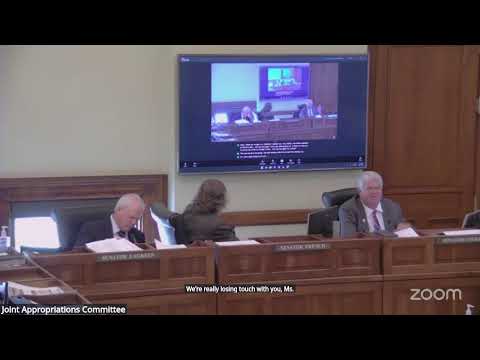
Attorney General Kautz told the Joint Appropriations Committee that Wyoming must "be proactive" in defending water rights and asked the Legislature for additional funding to do so. The request centers on interstate compact disputes, above all the Colorado River, and would pay for technical experts and outside counsel to support a likely lengthy legal fight.
Kautz said an initial exception request is aimed at producing the technical evidence and legal posture the state would need if litigation occurs. "This particular ask, this $5,000,000 ask, our estimates are that it's gonna be about, under this biennium, about 5,400,000," he told the committee, noting the total includes prior balances the office holds and would be split between technical work and outside attorneys.
Why it matters: Wyoming holds significant upper-basin water appropriations that feed downstream states. Kautz warned the committee the 1922 Colorado River compact was drafted with water-volume assumptions that no longer reflect current hydrology, and that lower-basin states and irrigation districts are already mobilizing legal teams and technical experts. "We have to be ready," he said, adding the Bureau of Reclamation—s pressure on allocations increases litigation risk.
The attorney general said roughly half the requested money would fund outside legal counsel and half technical experts (hydrographers, consumptive-use modelers). He told members technical studies should begin immediately to strengthen Wyoming—s bargaining position, while retained counsel would be drawn down if a suit is filed. Kautz cautioned that litigation over the Colorado River could be "decades long" if it reaches the U.S. Supreme Court.
Kautz also pressed a second priority: two additional HB 300 attorneys under the Federal Natural Resources Policy Account (FINERPA) to handle a surge of federal challenges and rulemaking impacts. He told the committee the HB 300 caseload has ballooned from a handful in 1999 to more than 50 cases in 2024, covering matters from sage-grouse and endangered-species disputes to EPA and land-use litigation.
Committee members pressed whether the office should hire more in-house specialists or rely on outside counsel for major cases. Kautz said the choice depends on case scope; smaller disputes have been handled efficiently in-house, but the scale of a Colorado River matter will require outside counsel plus state technical leads. He said a dedicated water attorney (Chris Brown) would lead the work inside the AG—s office while outside teams are coordinated when needed.
What's next: The committee asked for more precise timeline and budget breakout detail; Kautz said hydrology studies could take from a year to a decade depending on scope and the parts of the basin (some work can be completed quickly; other groundwater and basin-wide analyses are complex). He said litigation has not been filed and the ask is to prepare Wyoming from a position of strength.
Speakers quoted in this article are drawn from the hearing record and include Attorney General Kautz and Chris Brown of the AG—s water section. The committee did not vote on the exception requests during the hearing; the items remain subject to the appropriations process.