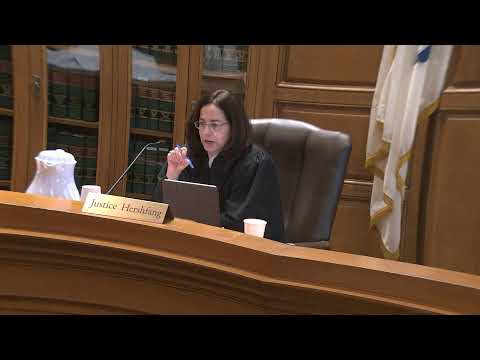
Appeals court weighs due-process claim over exclusion of social-worker release plan
Loading...
Summary
Appellant argued the trial court violated due process by excluding a social-worker release-and-discharge report that would have shown community supports and could affect reoffense risk; the Commonwealth countered that the social worker was a fact witness and that jury instructions and statutory evidence limited reversible error.
The Appeals Court panel considered whether a trial judge deprived a petitioner of due process by excluding a social-worker "release and discharge" plan from jury consideration in a civil commitment/violent-dangerousness matter. Attorney Caffrey, representing the petitioner, said the report detailed housing, mental-health and primary-care resources and would have shown the petitioner’s prospects for remaining in Massachusetts and engaging treatment, information he described as directly relevant to future risk and dangerousness.
Caffrey argued the exclusion left the jury with an "unbalanced view" and that the record preserved objection through a reserved motion and motions in limine. He framed Santos and other cases on expert-report admissibility, saying trial counsel attempted admission and that hearsay and litigation-preparation objections were improperly applied to this report.
Commonwealth counsel Brian Mansfield replied that the social worker was presented as a fact witness, not an expert, and that the contents of the report were made known to qualified examiners before trial; he said the Commonwealth’s rebuttal and the trial court’s repeated instructions about the Commonwealth’s burden reduced any claim of structural error or reversible prejudice.
The panel questioned whether the opening statement had improperly shifted the burden and whether the alleged omission could meaningfully affect the jury’s verdict. After argument the case was submitted.