
Appeals court hears challenge to juvenile stop and search after cemetery shots
Get AI-powered insights, summaries, and transcripts
Subscribe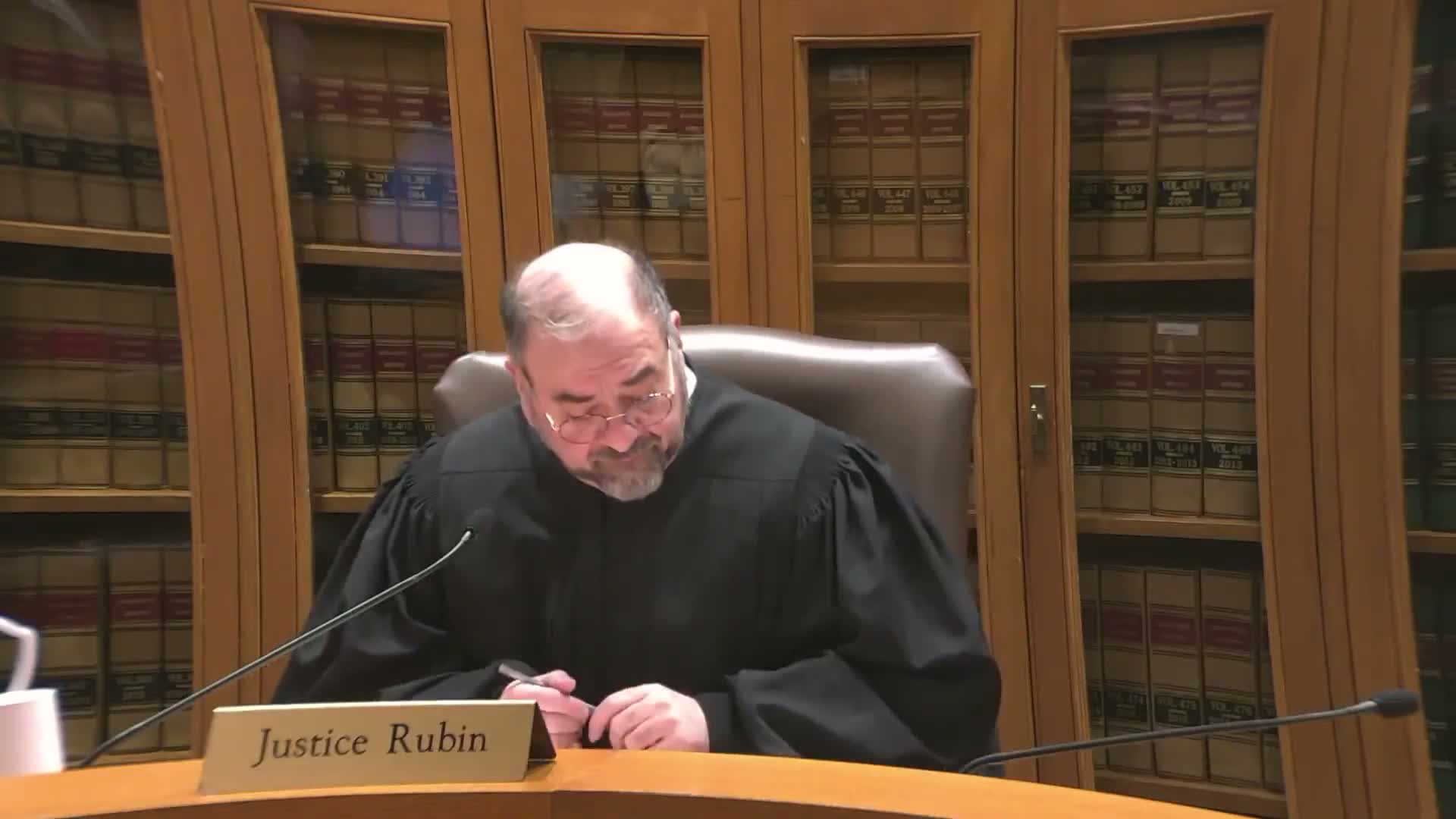
Summary
A three-justice panel heard arguments over whether police had reasonable suspicion to stop a juvenile after reported shots near a cemetery and whether officers exceeded a permissible pat frisk by reaching into the juvenile’s pocket, with defense counsel urging suppression and the Commonwealth arguing flight and hiding under a car justified officer safety measures.
A three-justice panel of the Appeals Court heard competing arguments on whether police improperly stopped and searched a juvenile after reported gunfire near a cemetery. Defense counsel Dennis Toomey argued the officers chased and seized the juvenile, "handcuffed him at gunpoint," and that Detective Mojica "skipped an external pat frisk" and reached directly into the juvenile’s pocket, a search Toomey said the court should suppress.
Justice Rubin and colleagues pressed both sides on the factual limits of the stop. Toomey emphasized that ShotSpotter alerts and a statement from someone on a rooftop did not establish that shots came from the cemetery and that no witness saw the juvenile fire or possess a gun, arguing that flight should carry little weight in reasonable-suspicion analysis after Warren and related precedents.
Rob Kidd, arguing for the Commonwealth, said the juvenile’s decision to hide under a car after an officer approached and the proximity to reported shots supported an officer-safety frisk and limited search. Kidd told the court the officer’s command to "show me your hands" constituted a seizure and said the totality of the circumstances—multiple reported shots, a nearby witness who said the sounds resembled gunfire and three people running from the cemetery—justified the inquiry and any immediate frisk for safety.
The panel questioned whether an officer’s tactile contact with a hard object during a scuffle is the functional equivalent of a pat frisk or whether established case law requires a formal external pat before reaching into pockets. Counsel debated Terry and later Supreme Court touch/feel precedents; Toomey urged strict adherence to the pat-frisk sequence, while the Commonwealth argued that the officer’s contemporaneous tactile perception during a forcible seizure could justify limited retrieval for safety.
The court took the case under submission after oral argument.