
Creighton board hears mixed early math results, approves progress-monitoring reports
Get AI-powered insights, summaries, and transcripts
Subscribe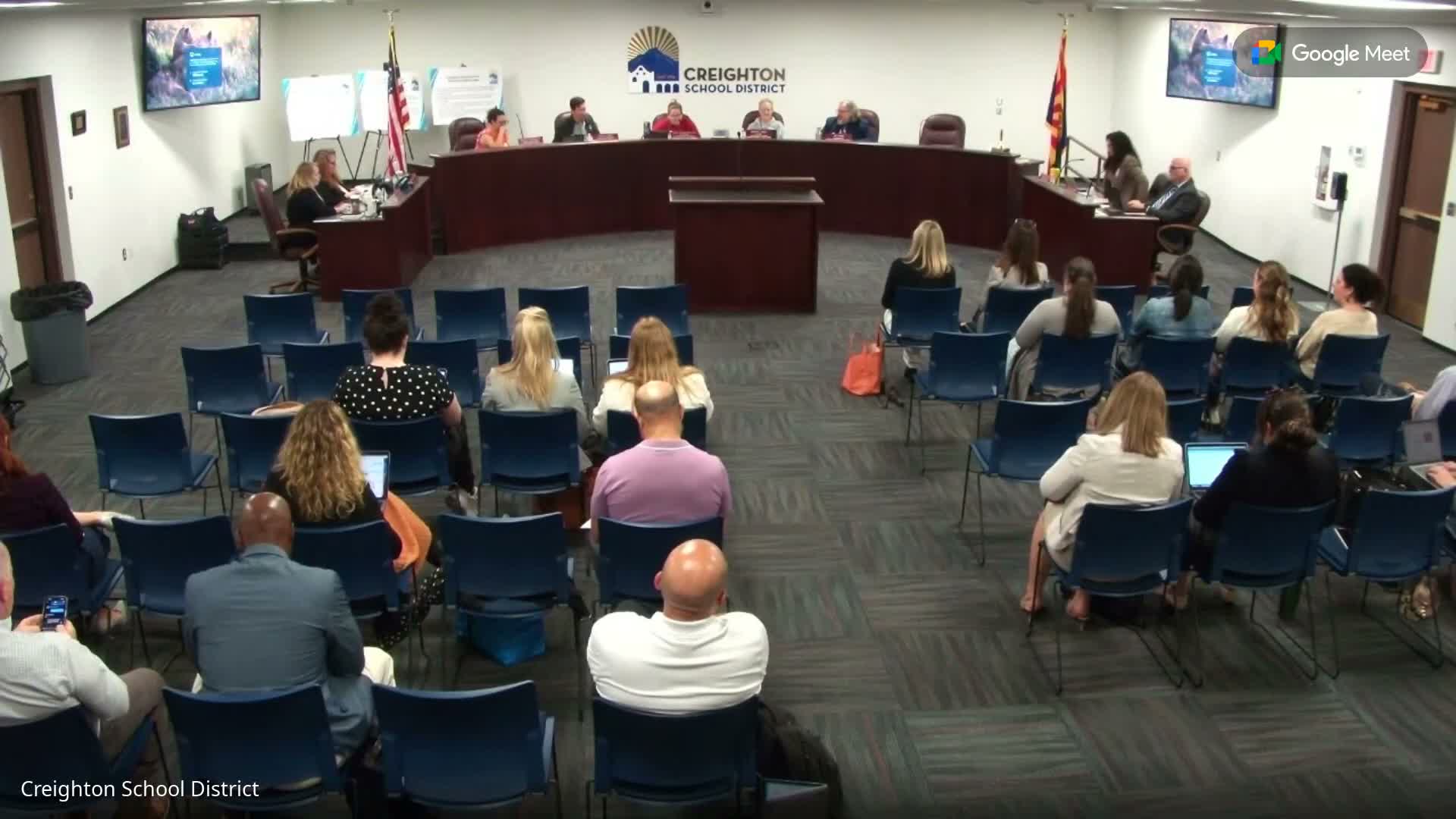
Summary
District staff told the board interim math benchmark data show both gains and declines among middle-school students; the board approved progress-monitoring reports for Goal 1 (all eighth graders) and Goal 2 (Black eighth graders) and will receive additional FastBridge data in February.
The Creighton School District board reviewed early interim math benchmark results and approved two progress-monitoring reports during its meeting, while district staff outlined next steps to support teachers and students.
District presenters said interim measure 1.1 (DNA assessment), administered about six weeks after school began, shows mixed results across middle-school grades. “So our first goal is to decrease minimally proficient in math for all eighth graders,” presenter Doctor Pambo said as the district reviewed the Student-Outcomes Focused Governance (SOFG) goal to lower the share of minimally proficient eighth graders from 73% to 48% by the target date. Staff said cut-score changes this year mean some students showed growth that did not register as crossing a proficiency threshold.
Doctor Kim Dodds, the district’s director of curriculum, instruction and assessment, described how the data were realigned and noted a correlation coefficient of about 0.7 to the AASA assessment. Dodds said a Sankey (flow) graph the district uses showed 68 students increased proficiency (including 55 who moved from minimally to partially proficient), 280 students stayed in the same proficiency band, and 100 declined. “For those standards that were actually taught, the numbers that we're seeing for mastery are significantly better than what we would typically expect,” Dodds said.
Staff cautioned that item types and timing matter: one multi-step open-response question on an interim benchmark required four correct parts with no partial credit, and attendance issues created some nonparticipation. The district said FastBridge interim results (interim 1.2) will be reported at the board’s February meeting.
Board members asked about the district’s decision to resequence standards earlier in the school year so essential standards are introduced sooner. Staff said the change was intentional to give students more time with difficult concepts and that the district will survey teachers, run data ‘roadshows’ and provide coaching to check implementation fidelity. They noted that learning-walk data indicate room for growth in classroom engagement and rigor and recommended continued supports including a 60–90 minute math block, coaching, and targeted action plans.
After discussion, a motion to approve the progress-monitoring report for Goal 1 (Report 2) passed. The board then heard Goal 2, focused on raising math proficiency for Black eighth-grade students (a multiyear target to reach 28% proficiency by August 2028). Presenters said interim measures for this subgroup show some gains but also declines in small cohorts; staff described follow-up steps including a book study for the math cohort, targeted coaching, and a pilot with Urban Connection for school leadership training.
A motion to approve Goal 2 (Report 2) also passed. District staff emphasized that the next formal data update will include FastBridge results in February, and they said they would share additional school-level breakdowns and follow-up materials with the board.
What’s next: The district will report FastBridge (interim 1.2) results in February and continue teacher supports, data roadshows and targeted action plans to address proficiency gaps and classroom implementation issues.