
Council discusses city‑sticker enforcement, permit fees and vacant‑building tools to boost revenue
Get AI-powered insights, summaries, and transcripts
Subscribe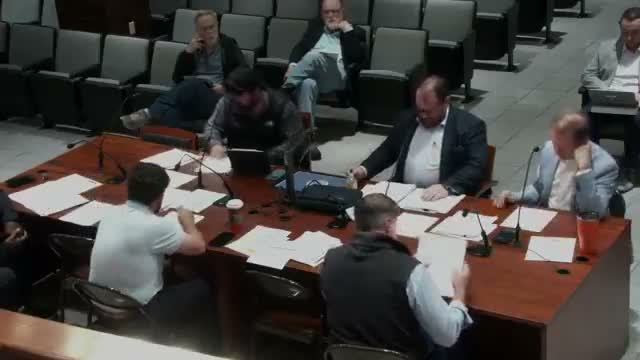
Summary
Officials discussed increasing city‑sticker compliance (estimated $250k–$900k potential), adjusting permit and zoning fees to recover staff time, and using receivership or demolition liens for vacant buildings; staff will research county clerk memorandum‑of‑understanding and comparable city fee schedules.
Jackson City council members spent a sizeable portion of the Nov. 25 meeting discussing ways to increase municipal revenue through better sticker enforcement, fee recovery, and vacant‑building remedies.
City‑sticker enforcement: Speaker 4 summarized that the city sells about 59,000 stickers, generating roughly $1.3 million in revenue, and estimated there are 60,000–70,000 vehicles inside city limits. Council members and staff debated whether the county's online tag‑renewal software can force purchase of a city sticker at the point of sale or whether the clerk must perform a manual step. Speaker 2 said, "When I go online to renew my tags, it's the honor system, and they have my address," and suggested automating sticker purchase; Speaker 4 said the county's system may not have the capability to block renewal without a sticker and recommended reviewing a memorandum of understanding with the county clerk.
Unrealized revenue estimates: Council members offered differing estimates of unrealized sticker revenue. Speaker 2 suggested "as much as 7 to 8 to $900,000" might be unrealized while Speaker 4 estimated "probably 250 to $300,000." Council directed staff to meet with the county clerk and explore vendor options before proposing fee increases.
Permit and fee recovery: The council discussed whether building‑permit, engineering, zoning‑letter and other fees adequately recover staff time. Speaker 3 said many services now require more staff time than in the past and should be charged accordingly; Speaker 2 noted the state’s new rule about fees above $250 (referenced as a public chapter requirement) that requires fee justification. Staff and council agreed to research comparable cities and to prepare recommendations.
Vacant buildings and demolition cost recovery: Members discussed tools for dealing with long‑term vacant or blighted properties, including liens, tax sale procedures, receivership, and neighborhood preservation approaches. Staff explained liens and demolition costs can be difficult to recoup if properties proceed through tax sale and receivership; council asked staff to research options and report back next month.
Next steps: Staff will consult with the county clerk and vendors about automating sticker collection, compile comparable fee schedules for cost‑recovery justification, and return with an update at the next meeting.