
Rockingham County hears three-tier proposal for countywide ALS service; $781,000 ask and phased buy-in proposed
Get AI-powered insights, summaries, and transcripts
Subscribe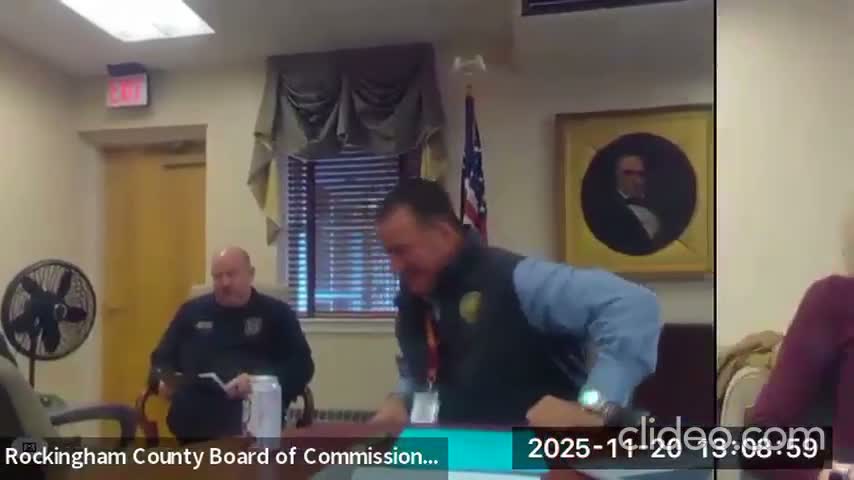
Summary
Chief Knutson presented a countywide advanced life-support (ALS) program and requested a potential county contribution of $781,000 for a full year (or $390,000 for January–June startup). Commissioners raised questions about municipal buy-in, tax mechanics, and oversight; next step is briefing the county delegation and executive committee.
Chief Knutson presented a plan for a county-level advanced life-support (ALS) program and asked the Rockingham County Board of Commissioners to consider a funding partnership to extend paramedic-level care across the county.
Knuston described services the program would add, including paramedic medication administration, prehospital point-of-care ultrasound and antibiotics, and a prehospital blood program for critically injured patients. "We're giving you a couple different medications and we're chemically paralyzing you from the eyes down," Knutson said, describing advanced airway management used when patients require that level of care.
The presenter provided three funding models and asked the county to consider a full-year contribution of $781,000. He also said a phased start would allow an initial county ask of roughly $390,000 to cover January–June, with municipalities paying user fees and the program pursuing state and federal grant offsets.
Commissioners probed feasibility and fairness. "The county is not currently involved in rescue operations at all," one commissioner said, noting that towns traditionally fund ambulance and rescue services and raising concerns about expanding county services without established county oversight. Several commissioners suggested asking towns to consider warrant articles and urged outreach to the county delegation and executive committee before committing county funds.
Board members and the presenter discussed a five-year phase-in, exemptions for towns that already provide 24/7 paramedic coverage, and tax mechanics the presenter used in the model: a municipal per-capita fee cited as $6.70 and a county multiplier cited as $2.49. The presenter said the breakdown reflects readiness, administration, medical supplies, insurance and capital replacement, and that municipalities that do not buy in would face higher per-call costs.
Commissioners agreed the next procedural step is to educate and seek support from the executive committee and the county delegation before any formal county appropriation. The chair suggested putting the item before the executive committee or delegation so legislative partners can weigh in. The presenter and commissioners also discussed staged billing, scheduled payments, and seeking offsets from state health and human-services programs.
The board took no formal funding vote during the meeting. Commissioners asked staff to develop clearer fiscal breakdowns, consider an inverse funding model that phases county support down as towns assume costs, and return with options for inclusion on the executive committee or delegation agenda.