Audit shows larger-than-expected FY 2024–25 surpluses; board warns delayed projects will raise future costs
Summary
District accountants reported sewer and water funds closed the year with surpluses—about $1.6M for sewer and ~$107k for water—driven by timing of CIP projects, unexpected ERAF receipt and investment returns; directors cautioned that delayed projects will increase future costs and asked staff for clearer public explanations.
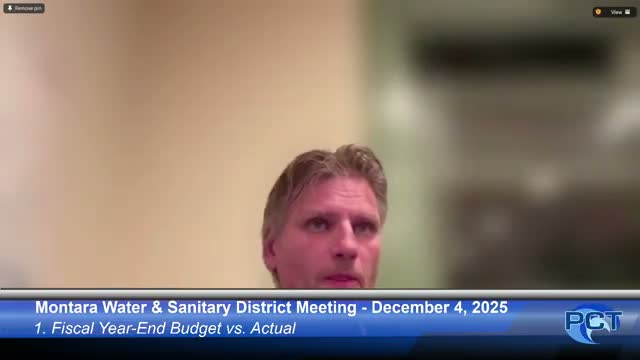
District staff presented the fiscal year 06/30/2025 audit and a budget‑vs‑actual review showing better-than-expected results but highlighting timing and project risks.
Peter Medina, the district accountant, told the board the sewer fund had been budgeted for an operating surplus of $770,000 but closed near $1.6 million. He attributed the variance to an unbudgeted ERAF property-tax receipt, $387,000 of grant revenue that passed through netted to zero on expenses, lower-than-expected meter purchases, higher investment returns and delays in planned capital projects that held spending below budget.
Medina said the district had anticipated drawing roughly $4.4 million from reserves but that drawdown did not materialize; instead, the audit showed a modest increase in fund balance (Medina cited approximately $38,000 added to the fund from the audit view). For the water fund he reported a modest surplus (about $107,000) and said the district added roughly $455,000 to its overall fund balance.
During discussion, directors and public commenters debated whether some projects had been “slow‑rolled” for years, increasing eventual costs. One director requested that staff (Peter and Keisha) present a clear public explanation of the accounting and project timing, saying recent discussion by Granada Sanitary District had prompted public questions about how project funds are shifted among priorities. Another director reminded the board that a budget is an estimate of funds to be collected and that formal project approval is a separate step; projects exceeding spending thresholds must return to the board for approval.
Medina emphasized the district has a multi‑year CIP and that delays increase costs: “You delay it, you pay more,” he said. Directors asked staff to prepare a midyear budget‑vs‑actual report in February and to provide public‑facing materials that explain how funds are budgeted and spent and why timing can produce year‑to‑year variances.
The presentation closed with board appreciation for improved financial reporting and a plan to review midyear results in February as staff begins budgeting for fiscal year 2026–27.