Committee on Parole hears multiple clemency requests; board recommends several pardons and commutations, denies others
Summary
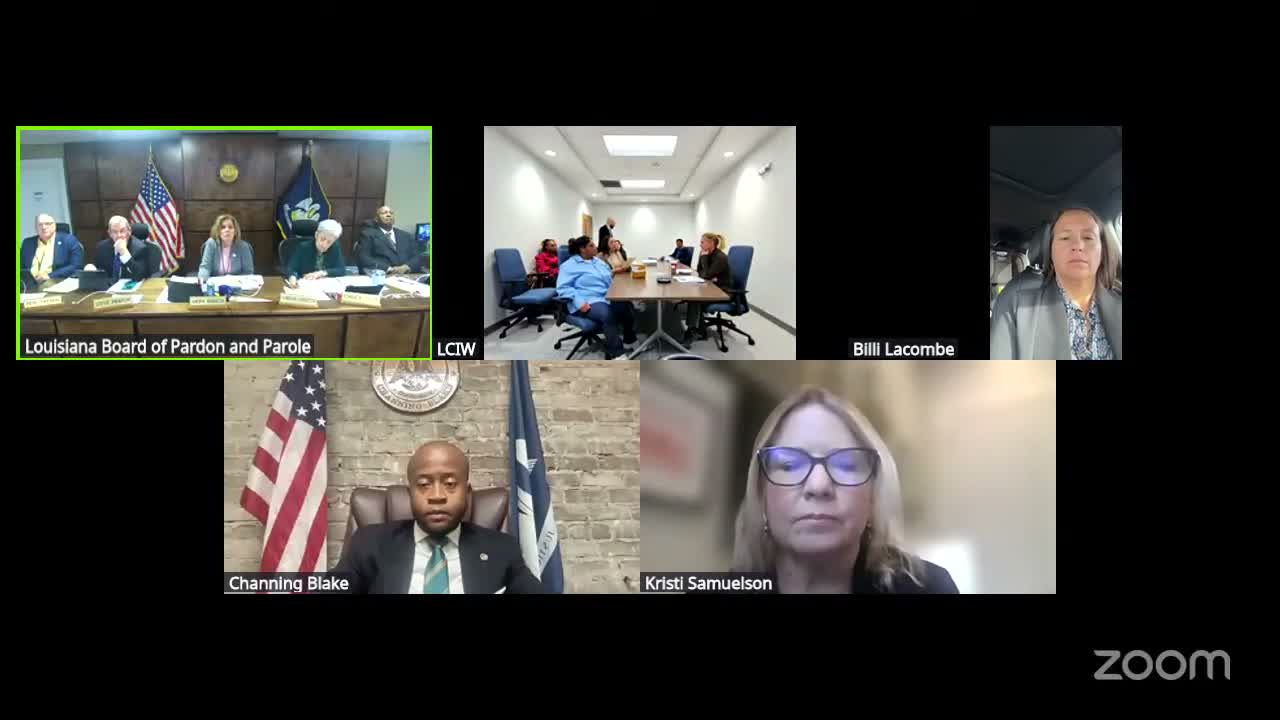
At its Dec. 1 hearing the Louisiana Committee on Parole reviewed dozens of commutation and pardon applications. The board recommended commutations or pardons for several applicants and denied others after testimony from victims’ family members, mental‑health staff and inmate advocates. Below: key outcomes and reasoning.
The Louisiana Committee on Parole met Dec. 1 to hear applications for commutation, pardon and restoration of rights from multiple inmates. After testimony from applicants, family members, prison staff and victims’ relatives, the board voted to forward several favorable recommendations to the governor and denied other requests.
Why it matters: The board’s recommendations are advisory to the governor but are the crucial procedural step toward commutation or pardon. Several decisions address long sentences tied to older convictions and reflect the board weighing rehabilitation, public‑safety concerns and victims’ appeals for finality.
Board decisions and reasoning
• Susie Patio: Family members and a Tulane domestic‑violence clinic attorney framed Patio’s case as arising in a context of longstanding abuse and urged clemency. Victim relatives strongly opposed release in emotional testimony. The board voted to recommend commuting her sentence to a term that would permit immediate parole eligibility, citing rehabilitative programming and the domestic‑violence context presented to the board.
• Elaine Bailey: Mental‑health staff said Bailey’s medication regimen stabilized her conduct beginning in 2021, and supporters promised reentry services. Board members expressed concern about medication compliance and prior disciplinary reports and denied the commutation, inviting reapplication after more sustained stability and programming.
• Marcus Sledge and Marcus Artis: Prison officials described both men as longtime trustees with limited recent infractions; counsel and supporters detailed program participation, vocational skills and family support. The board voted to recommend commutation for Sledge (to 99 years with immediate parole eligibility as recommended by members) and to recommend commuting Artis’s sentence to 50 years with immediate parole eligibility, to be forwarded to the governor.
• Pardons with restoration of firearms: The board recommended pardons (with full restoration of firearms rights) in several cases where applicants had lengthy post‑conviction records of stability and no law‑enforcement opposition. Those recommended included Charles Panetta, Jeffrey Darville, Randall Parks and Perry Young; the board will forward those recommendations to the governor.
• Melissa Marker and Vanessa Ryder: In Marker’s case, the applicant described sustained sobriety and community work but the Jefferson Parish assistant district attorney opposed a pardon based on Louisiana’s 10‑year statutory “cleansing” period for DWI convictions; the board denied the request. In Ryder’s manslaughter case, board members noted the loss of life and the applicant’s short custodial term; the application was denied.
What the board emphasized
Board members repeatedly balanced evidence of rehabilitation — program completion, trustee status and community support — against concerns about public safety, victims’ loss and statutory limits. Where medical or mental‑health stabilization was recent, some members asked for a longer period of documented stability before recommending clemency; where applicants showed many years without infractions and strong community plans, the board was likelier to recommend a pardon or commutation.
Next steps
The board’s favorable recommendations will be transmitted to the governor’s office for final action; denials conclude the board’s review for now but applicants were told when and how to reapply or pursue other administrative remedies.
Quotes that capture the hearing
"The jury did not hear that at the time," said Ella Coleman, student attorney for the Tulane domestic‑violence clinic, urging the board to consider context a jury lacked. "I've seen a woman who was grown, who's reflected, and she's taking responsibility," said Felicia (identified as a daughter of an applicant) while urging commutation.
Ending
The committee heard additional cases on the same docket; several recommendations will move to the governor’s office for review while other applicants were denied and told to pursue further programming or reapply when conditions specified by the board are met.