
Judge Allows Two Limited ‘Other-acts’ Witnesses; Expert Debate Over Suture Exams, Gloves and Penetration Anchors Closing Arguments
Get AI-powered insights, summaries, and transcripts
Subscribe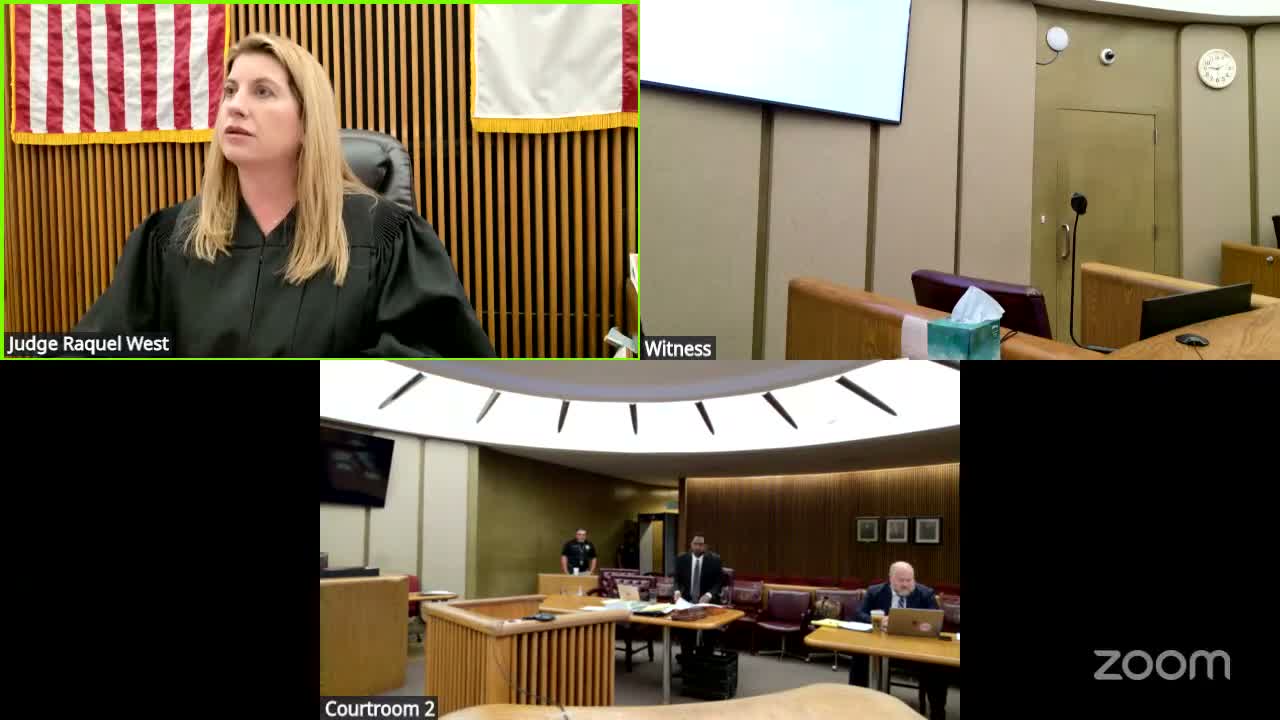
Summary
In the Neer Banure trial in Jefferson County’s 252nd District Court the judge permitted two prior-acts witnesses to testify for the limited purpose of intent and absence of mistake; testimony and expert evidence focused on how inner-thigh sutures are examined, whether glove use is standard, and whether the victim’s description meets the legal definition of penetration.
A judge in the 252nd District Court on Monday allowed the state to present testimony from two prior-patient witnesses for the narrow purpose of showing intent and absence of mistake, then sent the case to jurors after competing testimony and argument over surgical practice and the legal meaning of penetration.
The judge told jurors before the testimony: "You are about to hear testimony about other acts that are not charged in the indictment. The state is offering these for the limited purpose of showing intent, lack of accident, or absence of mistake. You may only consider them if you believe them beyond a reasonable doubt." That limiting instruction was the basis for the court’s decision to admit two witnesses the state proffered — identified in court as TK and SM — and to exclude other proffered witnesses as too remote or prejudicial.
On direct examination the state presented Tammy Kennedy Grovershow, who testified that after an October 2021 inner-thigh lift she returned to the defendant’s office when an incision opened and later "felt as if I had been penetrated" after the local anesthetic wore off. Grovershow also told the court she had a 2023 mini tummy-tuck consultation in which she said the defendant touched her breast "without asking me." The defense impeached dates and memory, noting Ms. Grovershow had returned to the same surgeon for multiple procedures over many years.
The state also called Samantha Muller, who described a 2001 mini tummy-tuck follow-up in which she said the defendant placed his groin against her leg while she was on the exam table, and a later carpal-tunnel surgery where she said she awoke with her underwear displaced and irritation in her genital area. Both witnesses told the district attorney’s office this year after learning of the charges.
Defense counsel objected to admission of those accounts as character or propensity evidence under Rule 403 and argued the state’s written disclosures were incomplete. The judge acknowledged the defense objections but ruled that, for the limited purposes articulated to the jury, the probative value outweighed prejudice as to the two admitted witnesses.
The defense presented Dr. Peter Chang, a board-certified plastic surgeon, to explain surgical practice. Dr. Chang testified he has frequently performed inner-thigh lift and tummy-tuck procedures and that—depending on the incision location and how sutures lie—examining or removing inner-thigh sutures can require close access, repositioning the patient’s legs or garments, or working near the labial area. On whether practitioners routinely wear gloves for such suture work, he said practice ‘‘varies’’ and that some surgeons do not wear gloves for specific dressing or tape work, while others do.
Prosecutors repeatedly pressed the expert about whether he relied on peer-reviewed literature and whether professional or regulatory guidance (Texas Medical Board rules, Occupational Safety/OSHA guidance and society ethics codes) set a binding standard. The prosecution introduced and the court admitted several governing materials, including Texas Medical Board disciplinary guidance and ethics statements from professional societies; the cross-examination focused on whether those sources alter the factual inferences jurors may draw from Dr. Chang’s anecdotal description of practice.
In closing arguments, defense counsel urged jurors the state had not proved "penetration" as the charge defines it and stressed inconsistencies or imprecision in dates and memory across witnesses. Prosecutor Tommy Coleman told jurors "If you believe Taylor Dempsey’s testimony, then that's all you need," pointed to corroboration by the complainant’s mother and a sexual-assault nurse examiner, and argued jurors could draw reasonable inferences from the totality of evidence to conclude the state met its burden.
After the court read the jury charge — which defines penetration and explains that prior-act testimony may be considered only if the jurors first find beyond a reasonable doubt that the defendant committed the other act — the jury was sent to deliberate. The record shows the judge directed deliberations under written instructions and excused alternates for further guidance.
Next steps: jurors will deliberate on the charged offense (penetration of the sexual organ) and the lesser-included attempted assault option pending their vote. The court’s limiting instruction and the admissions of the two prior-patient witnesses will be part of the evidence the jury may consider only for the specific, limited purposes the judge described, not to show general bad character.