
Davenport council pauses solar‑farm zoning amid West End protection concerns
Get AI-powered insights, summaries, and transcripts
Subscribe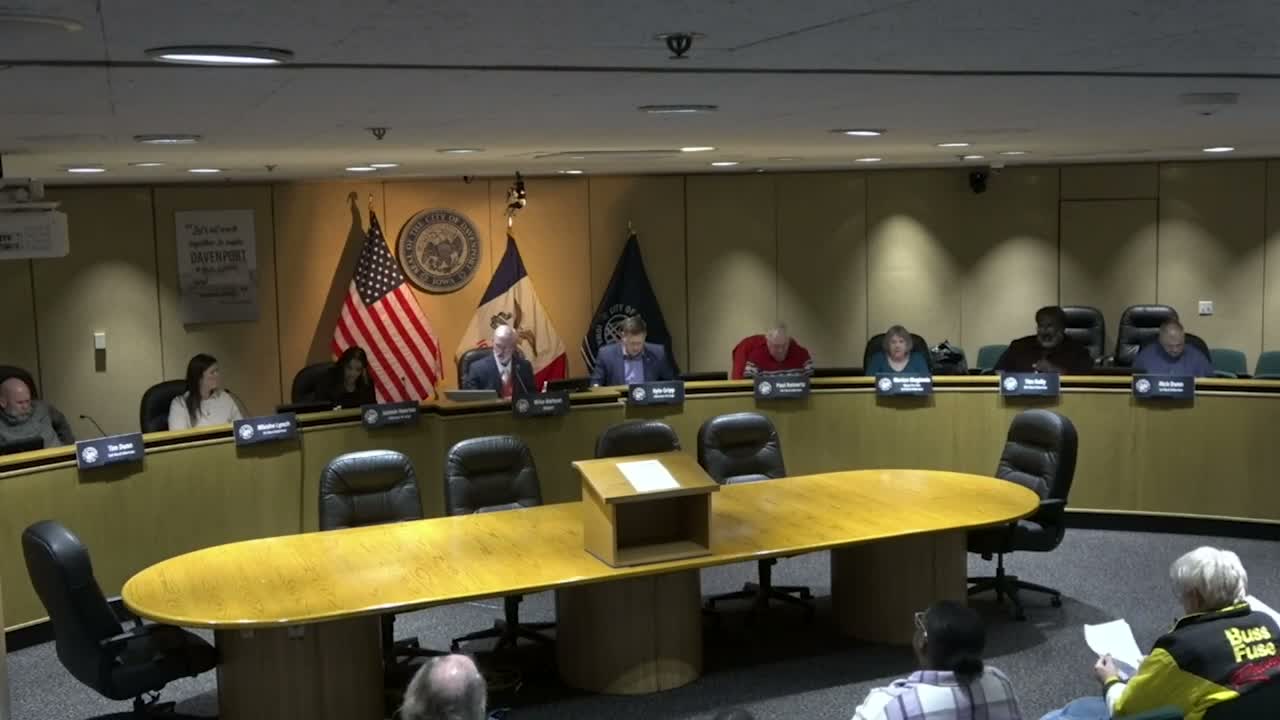
Summary
Council postponed third consideration of ORD 25‑02—an ordinance to regulate solar farms as a principal use—by a 9–1 vote, after members and staff agreed a forthcoming West Davenport land‑use study should guide any final rules to avoid harming planned infrastructure investments.
The Davenport City Council Committee of the Whole voted 9–1 on Dec. 3 to postpone third consideration of ORD 25‑02, an ordinance that would tighten rules governing utility‑scale solar farms and freestanding panels, after weeks of debate over protecting the city’s West End economic‑development corridor.
Supporters of postponement said the council should align any zoning changes with a consultant‑led West Davenport land‑use and infrastructure study due in spring; they argued acting now risks locking in rules that would either leave valuable land unprotected or invite state preemption. Alderman Newton asked staff whether the ordinance as presented could be made to explicitly safeguard the West End. Laura Berkeley of Development & Neighborhood Services said the city could adopt a land‑use policy by resolution tied to the study to direct the zoning board of adjustment on which areas are appropriate for solar.
Alderman Kelly pressed for clearer location guidance and called for the ordinance to be delayed until the study is completed so councilmembers could vote with both documents in hand. Mayor and other members warned the council already has a moratorium through February that prevents new large solar installations and that the proposed code in front of council is, in some respects, more restrictive than current rules.
After a motion to postpone was made and seconded, the council conducted a roll call and the motion carried 9–1, with Alderman Gripp the lone dissent. Council staff said the item will return after the West Davenport land‑use study is complete; staff anticipates bringing related materials in spring 2026.
Why it matters: the West End is the focus of a multiyear infrastructure and economic‑development push; council members said they did not want to undermine prior sewer and road investments by allowing large solar developments in areas intended for industrial or other growth.
What’s next: the ordinance will be returned for further consideration after the land‑use study and associated resolution are completed. The moratorium remains the city’s primary protection in the near term.