
Board advances first reading of amended home‑occupation rules; public hearing set for Dec. 16
Get AI-powered insights, summaries, and transcripts
Subscribe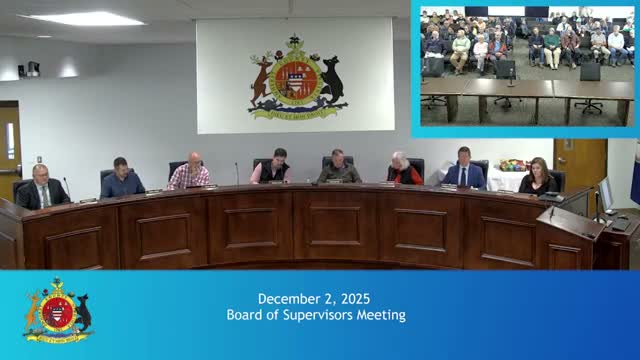
Summary
The Board approved a motion to advertise proposed changes to home‑occupation rules (Ordinance 2025‑57) that would allow limited on‑site nonresident workers, limit advertising that reveals addresses, and expand allowed floor area; staff framed changes as conforming with neighboring localities.
The Amherst County Board of Supervisors voted Dec. 2 to advertise a proposed ordinance (2025‑57) revising the county’s home‑occupation rules for a public hearing on Dec. 16.
Planning staff said the Planning Commission and Economic Development Authority reviewed proposed edits that staff framed as aligning Amherst with neighboring localities. Key changes in the draft include allowing one nonresident employee to come to a home for off‑premise work at a time, requiring appointment‑only client visits (no drop‑ins), barring advertising that exposes residential addresses, limiting outdoor display of goods, and increasing allowable home‑occupation footprint from 25% or 500 square feet to up to 40% or 1,000 square feet of the main dwelling (and modifying accessory‑structure limits).
Board members asked for legal review of language restricting social‑media advertising that names a residential address and discussed whether limiting client count to one is too restrictive for certain professions. The county attorney advised that regulating signage on property is standard, but curbing social‑media content may be legally fraught and needs review. Mr. Martin moved to direct staff to advertise the ordinance for a Dec. 16 public hearing; the motion passed by voice vote.
If adopted after public hearing, the ordinance would alter permitted uses in residential and mixed‑use districts, and staff said recommendations drew on language from Campbell County, Bedford, Lynchburg and Nelson County.