Get Full Government Meeting Transcripts, Videos, & Alerts Forever!
Get email alerts on the Zoning Enforcement topic
No spam. Unsubscribe anytime.
Zoning board moves to add B1/B2 restrictions on inoperable vehicles; enforcement approach to be drafted
Summary
Morgan Township zoning board discussed enforcement options for inoperable vehicles on business properties and agreed to draft a code amendment applying the outside‑storage restriction to B1 and B2 districts while excluding heavier commercial/industrial B3 uses; staff will present language for a vote next month.
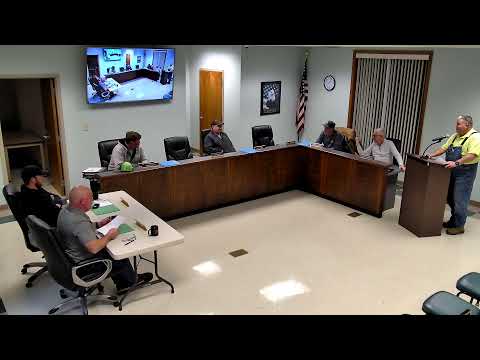
Morgan Township’s zoning board took up complaints about multiple inoperable vehicles on business property and agreed Dec. 3 to pursue a targeted zoning amendment that would prohibit more than one inoperable vehicle outside an enclosed structure in B1 and B2 business districts.
Zoning staff and several board members said enforcement is complicated because businesses vary in the legitimate need to keep vehicles on site (for example, auto repair and construction shops). Darren, a zoning staff person who spoke during the meeting, described the logistical burden of investigating and enforcing abandoned‑vehicle rules: identifying a vehicle owner requires obtaining VIN information, sending notices and following a statutory process that can be time‑consuming and costly (SEG 931–936). Darren said a courtesy letter to the property owner is the simplest first step for the complaint discussed in the meeting.
Board members reviewed state and local legal references during the discussion. The meeting record includes citations to Ohio Revised Code sections addressing abandoned junk vehicles and operation of unsafe vehicles (the transcript spoke of ORC 4513.63, 4513.64 and 4513.11) and contrasted those enforcement tools with the township’s zoning authority under ORC 519 and existing township code references (transcript cited township code sections shown roughly as 505.173 and 505.871). The chair and members emphasized that criminal or state enforcement statutes and township zoning remedies are different tools: state statutes allow law enforcement to tag and dispose of abandoned vehicles, while zoning language gives the township an administrative tool to prohibit storage of multiple inoperable vehicles in specified districts.
As a practical drafting choice, the board agreed to add B1 and B2 business districts to the zoning article that bans more than one inoperable vehicle outside an enclosed structure; that approach would exempt industrial or heavy commercial B3 uses (where auto repair or similar activities are more common). One member summarized the agreed direction: add B1 and B2 into the zoning article and schedule a vote next month after staff drafts the specific language.
Board members also discussed fence‑height language and other technical edits, and staff reported multiple ongoing violations that will be handled through the court process or by courtesy letters as appropriate.
What’s next: staff will draft the B1/B2 amendment language and bring it back to the board for a vote next month; enforcement on the specific complaint discussed will proceed with a courtesy letter and follow‑up inspection.