
Millis leaders urge voters to back Middle-High School MSBA renovation on the ballot next week
Get AI-powered insights, summaries, and transcripts
Subscribe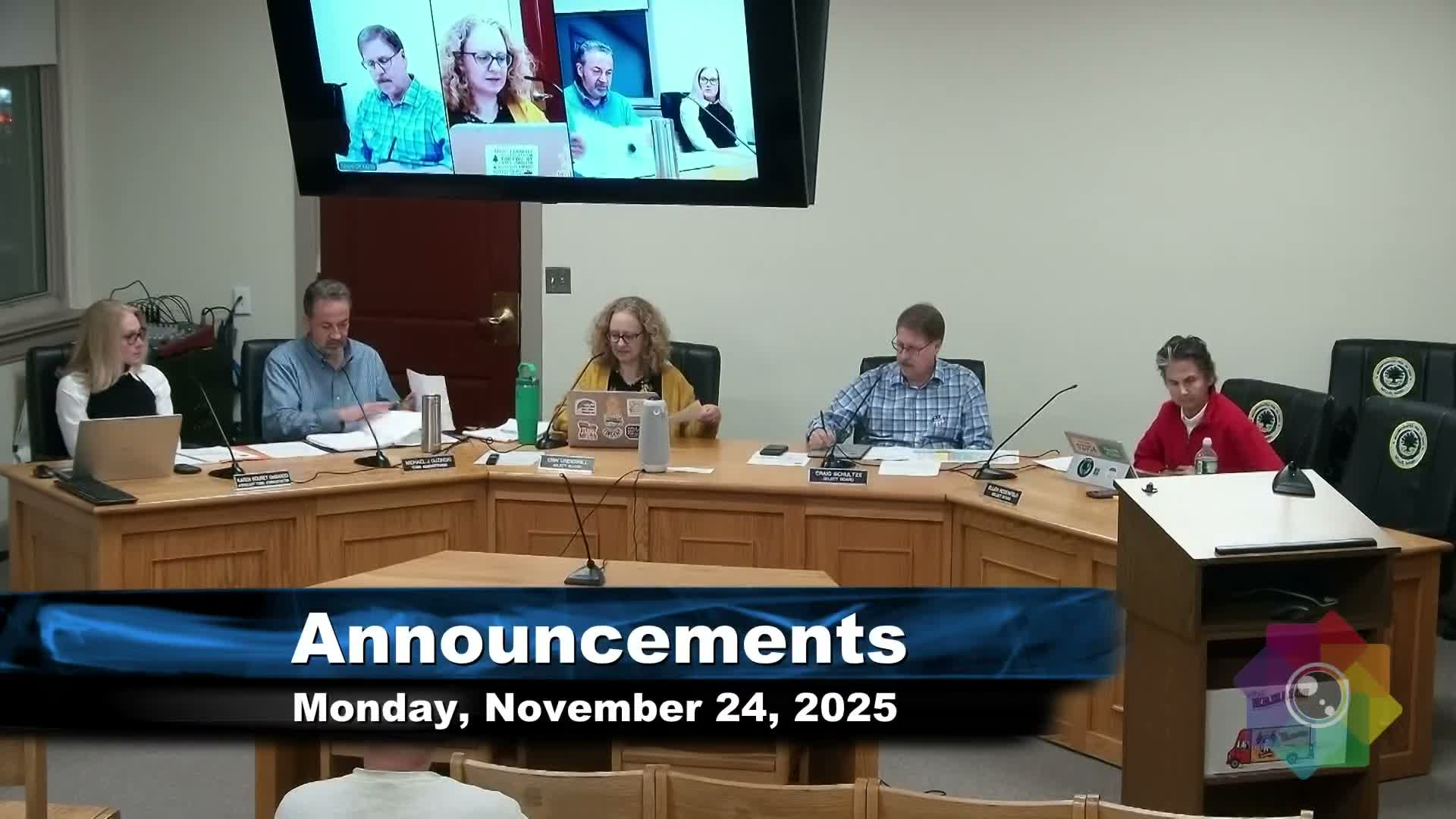
Summary
Select Board members said the MSBA-supported renovation passed at Town Meeting and urged residents to use early voting or vote on the upcoming ballot; officials disputed claims the school was neglected, explained why renovation (not replacement) is the MSBA approach, and outlined town debt context and expected tax impacts.
Select Board leaders used the Nov. 24 meeting to press residents to vote on the Millis Middle‑High School renovation plan that the Massachusetts School Building Authority (MSBA) has framed as a renovation project.
Board members said the MSBA-approved plan passed overwhelmingly at Town Meeting and that early voting had begun the day of the meeting; in-person voting is scheduled at Town Hall next Monday. Officials said the MSBA process favors renovation when feasible and that the board rejects claims the existing building was never maintained — they said the structure, though nearly 70 years old, ‘‘has terrific bones’’ and requires infrastructure upgrades that have exceeded useful life.
Officials reviewed municipal borrowing history and what they described as three distinct borrowing categories: non‑exempt debt for vehicles and equipment (ambulance, Vactor truck), and exempt debt that raises taxes for capital projects (library, police and fire stations, and Clyde Brown School). Board members recited figures on prior borrowing and the town’s share of school costs — they said the town’s bonded portion of the Clyde Brown project was about $29 million of a roughly $52 million total — and noted an estimated per‑household tax impact figure cited by the board.
Speakers urged voters to weigh both community needs and personal priorities when they mark their ballots, noting early voting options. No formal municipal action on the school bond was taken at this meeting; the discussion functioned as an informational push before the upcoming ballot.