Get Full Government Meeting Transcripts, Videos, & Alerts Forever!
Get email alerts on the Minimum Wage topic
No spam. Unsubscribe anytime.
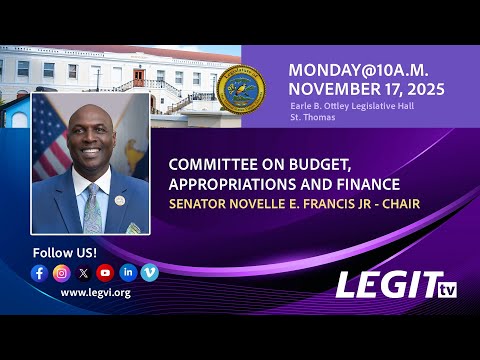
Senate committee advances amended minimum‑wage bill after hearings from labor and business
Summary
The Committee on Budget, Appropriations and Finance heard testimony on Bill 36‑0030 to raise the USVI minimum wage and approved an amendment setting phased increases to $12 (2026), $14 (2027) and $15 (2028) with a COLA mechanism beginning in 2029; the Department of Labor and the Bureau of Economic Research recommended clearer COLA language and filling the wage‑board vacancies.
Senators heard more than two hours of testimony on Nov. 17 about Bill 36‑0030, which would raise the U.S. Virgin Islands minimum wage from $10.50 (frozen since 2018) in a phased schedule that the committee amended and approved to send forward.
Senator Franklin D. Johnson, the bill sponsor, framed the measure as an effort to help working families living under sharply higher costs since 2018. "If you walk in the Virgin Islands, you should be able to live in the Virgin Islands," Johnson said, urging action after seven years without a territory‑wide increase and citing local price spikes in groceries, housing and utilities.
The Department of Labor told the committee it supports the revised schedule. Commissioner Gary Molloy said the bill, as amended on Nov. 13, would raise the minimum to $12 on March 1, 2026, $14 on March 1, 2027, and $15 on March 1, 2028, with annual cost‑of‑living adjustments beginning in 2029. "The Department of Labor supports this legislation," Molloy said, and asked the legislature to clarify the exact formula or index that will determine future adjustments so employers and workers will know how the COLA will operate.
Economic analysis from the Bureau of Economic Research echoed the need for a gradual, data‑driven approach. Director Halden Davies told senators that a modest phased increase aligned with the territory's living‑wage study would reduce poverty and boost local spending. The bureau cited living‑wage estimates — for example, a single adult with benefits would need about $13.70 per hour — and recommended filling wage‑board vacancies so future adjustments can be overseen by an expert panel.
Representing business, Scott Barber of the St. Thomas–St. John Chamber of Commerce said the Chamber accepts that an increase is warranted but urged caution about automatic escalators. Barber cited national CBO research that ‘‘raising the minimum wage would increase the cost of employing low wage workers’’ and said the Chamber prefers a one‑time statutory raise (the Chamber advocated $13) over automatic multi‑year increases because of uncertainty and potential business shocks.
Committee members asked detailed questions about implementation, including the effect on public‑benefit eligibility and student exclusions. The testimony included a local count from the Bureau of Labor Statistics director, Gary Halyard, that about 14,650 individuals in 2024 were paid at or near the minimum wage. Senators also pressed for clarity about student exclusions in the amendment; former sponsor Senator Bridal warned that excluding high‑school workers could create incentives to hire minors for lower pay.
After the record‑setting round of questions, the committee considered Amendment 36.622, which adjusted several implementation dates and reduced a late step to $15 (from $16 in earlier language). The amendment was moved, seconded and approved in committee; the committee then voted to report the amended bill favorably to the Rules and Judiciary Committee for further action. Vote tallies were recorded on the roll call in committee.
What happens next: the committee sent the amended bill forward for additional vetting and possible floor action. Senators and the Department of Labor asked that the COLA language be made explicit before final passage so employers and workers understand how annual adjustments will be calculated.